


Mold symptoms in kids are easy to mistake for a cold, seasonal allergies, or general fatigue. But when symptoms keep coming back, and nothing else explains them, indoor mold exposure could be the cause. The earlier you spot the signs, the sooner you can protect your child’s health and get to the source of the problem.
This guide covers what mold symptoms look like in kids, why children are especially vulnerable, and how to know when it is time to bring in a professional.
Why Kids React to Mold Differently Than Adults
Children breathe in more air relative to their body weight than adults do. Their immune systems are still developing. Both of these factors mean that kids tend to react to airborne mold spores faster and more severely than healthy adults in the same home.
The CDC notes that early mold exposure has been linked to the development of asthma in some children, particularly those who may be genetically susceptible. In Central Florida, where warm temperatures and high humidity create near-ideal conditions for mold growth, the risk inside homes is not a minor concern.
Young children also spend more time indoors on the floor, where settled mold spores concentrate at higher levels than they do at adult height. Toddlers and school-age kids in moldy homes often show symptoms before parents or other household members notice anything at all.
Common Mold Symptoms in Kids
Not every child reacts the same way. Some experience mild symptoms, such as allergy-like irritation. Others exposed to higher concentrations or more toxic mold species may develop more significant health effects.
The symptoms below are the most common patterns parents and pediatricians see.
Respiratory Symptoms
Respiratory issues are the most well-documented effect of mold exposure in children. Watch for:
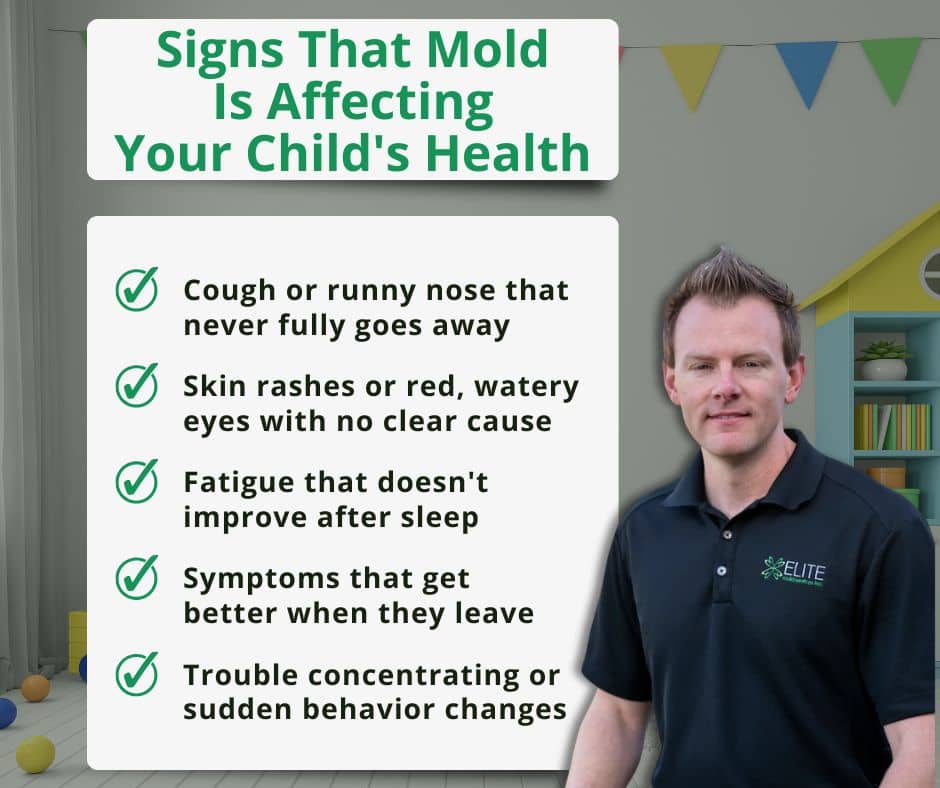
- A cough that lasts more than two weeks and does not improve with typical treatments
- Wheezing, whistling sounds while breathing, or unexplained shortness of breath
- A stuffy or runny nose that is present year-round, not just during allergy season
- Recurring upper respiratory infections or bronchitis
- Worsening of existing asthma, or new asthma-like symptoms in a child not previously diagnosed
The EPA confirms that inhaling mold can cause adverse health effects, including coughing, wheezing, pneumonia, and asthma attacks. Importantly, nearly 80 percent of asthma cases begin before the age of six, which is why indoor air quality in young children’s homes is worth taking seriously.
A key pattern to watch: symptoms that improve when your child leaves the house for a few days, then return when they come back. That pattern points toward the home environment as the source.
Skin and Eye Reactions
Some kids develop visible skin and eye symptoms from mold exposure. These include:
- Red, watery, or itchy eyes that do not respond to typical allergy eye drops
- Skin rashes, hives, or patches of dry, irritated skin with no clear dietary or contact trigger
- Persistent sinus irritation or nosebleeds from inflamed nasal passages
These reactions are most common in children with existing sensitivities, but they can appear in kids with no prior allergy history if the mold concentration in the home is high enough.
Fatigue and Cognitive Changes
This category is often the last to get connected to mold because the symptoms look so much like other childhood issues. Persistent, unexplained fatigue and sudden changes in attention, mood, or behavior can be tied to longer-term or higher-concentration mold exposure.
Signs that sometimes get overlooked:
- Constant tiredness that does not improve after a full night’s sleep
- Difficulty concentrating at school, declining grades, or trouble remembering things that were previously easy
- Mood changes, increased irritability, or withdrawal that came on without an obvious cause
- Recurring headaches, especially in the morning or after being home for several hours
Research into children with confirmed indoor mold exposure has found measurable changes in cognitive function. These symptoms are among the most likely to be misattributed to stress, behavioral disorders, or developmental differences when the actual trigger is the indoor environment.
How to Tell If Mold Is Behind the Symptoms
No single symptom points directly to mold. The pattern matters more than any one sign. Ask yourself:
- Do symptoms appear or worsen when your child is home and improve when they travel or stay elsewhere?
- Do multiple family members share similar symptoms, even if the symptoms are not identical?
- Has there been any water damage, a musty smell, visible discoloration on walls or ceilings, or a history of HVAC or plumbing issues in your home?
- Did the symptoms start or worsen after moving into a new home, or after a flooding or leak event?
If more than one of these is true, a professional mold inspection is worth scheduling before ruling out environmental exposure. A mold inspection can identify hidden moisture problems and mold growth that would not be visible to a homeowner and that no number of air fresheners or surface cleanings would address.
For Central Florida families, the risk factors are compounded by the climate. High humidity, frequent rain, and aging HVAC systems create conditions where mold often grows inside walls, under flooring, and in ductwork without any visible signs on the surface. Elite Mold Services provides mold inspections, air sampling, and indoor air quality testing throughout the Orlando area.
Related Questions to Explore
How do I know if mold is making my kids sick? The clearest signal is a symptom pattern tied to your home. If your child’s symptoms improve when they stay somewhere else for several days, then return when they come back home, that pattern points toward the indoor environment.
A professional mold inspection can confirm or rule out mold as the cause by testing air samples and checking for hidden moisture sources.
What are the 10 warning signs of mold toxicity? The most common signs of mold-related illness include persistent coughing or wheezing, recurring respiratory infections, year-round nasal congestion, unexplained fatigue, skin rashes, red or watery eyes, headaches, difficulty concentrating, mood changes, and symptoms that consistently improve when away from home.
Not every child shows all of these. The overlap with common illnesses is why mold exposure often goes unrecognized for months. For more on mold illness symptoms in adults, see our guide to common symptoms of illness from mold exposure indoors.
How can I test my child for mold? A pediatrician can order allergy testing to check whether your child has a sensitivity to mold species. However, a positive allergy test only tells you about sensitivity, not about the level of exposure in your home. The more actionable step is to have the home tested. A professional mold inspection identifies whether mold is present and at what levels, which gives you the information you need to take action.
When to Call a Professional
If your child has had unexplained respiratory symptoms, skin reactions, fatigue, or behavioral changes for more than a few weeks, and you have not been able to identify a clear cause, a mold inspection is a reasonable next step.
You do not need to see visible mold first. Most mold growth that affects indoor air quality starts in hidden locations: inside wall cavities, beneath bathroom or kitchen flooring, in crawlspaces, or inside HVAC ductwork. A visual check of your home’s surfaces will not tell you what is happening in those spaces.
A professional mold assessment can identify moisture intrusion, collect air and surface samples, and give you a clear picture of what is in your home’s air. If mold is found, you will have the documentation you need to work with a remediation contractor and to confirm through post-remediation verification that the problem has been properly resolved.
Elite Mold Services has served Central Florida homeowners since 2006. Our inspectors are state-licensed and certified in mold assessment. If you have concerns about your child’s symptoms and your home’s indoor air quality, call us at 407-753-6341 or schedule an inspection online.
Conclusion
Mold symptoms in kids often look like a routine illness, which is why they go unrecognized for months. The key is pattern recognition: symptoms that persist, that are tied to your home environment, and that affect multiple family members point toward indoor air quality as a factor worth investigating.
Key takeaways from this guide:
- Children are more vulnerable to mold exposure than adults due to body weight, immune system development, and time spent at floor level
- The most common symptoms span respiratory, skin/eye, and cognitive/behavioral categories
- Symptoms that improve away from home and return when your child comes back are the strongest signal
- A professional mold inspection, not just surface cleaning, is how you confirm whether mold is present and at what levels
If you suspect your home may be affecting your child’s health, schedule a mold inspection with Elite Mold Services. Our team can assess your indoor air quality and help you figure out the right next steps.