


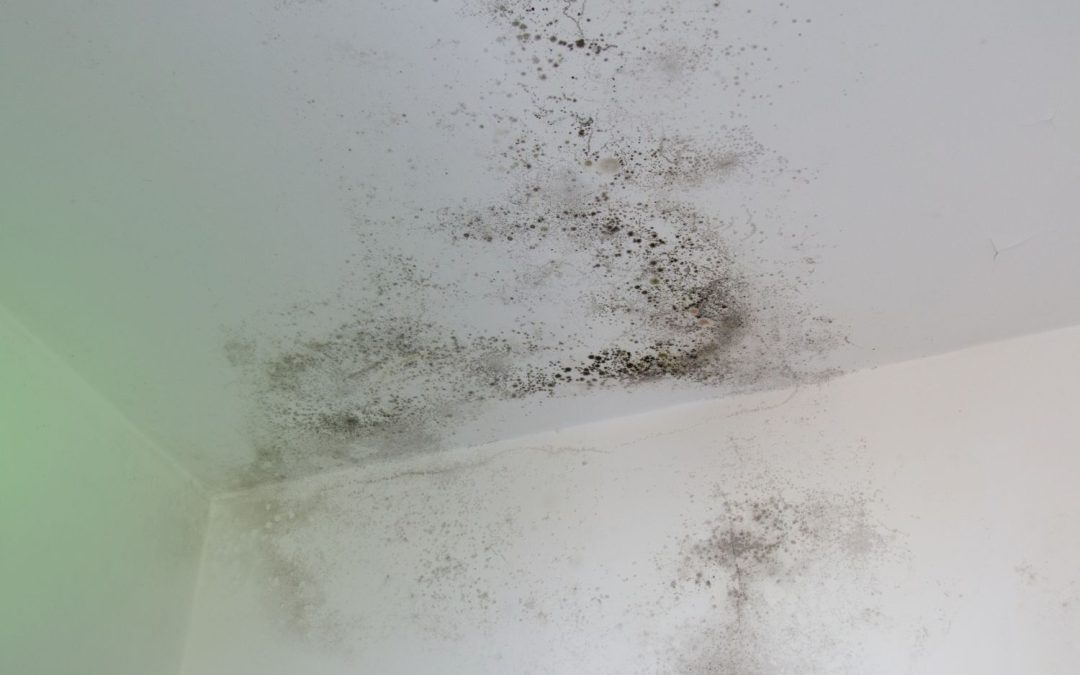
Mold testing is not always necessary, but there are specific situations where it gives you information a visual inspection cannot. If you can see mold, the EPA recommends skipping the test and going straight to remediation.
But when mold is hidden, suspected, or disputed, professional testing from a certified company, like Elite Mold Services, can clarify exactly what you are dealing with and where it is.
What Does Mold Testing Actually Tell You?
Mold testing measures the type and concentration of mold spores in your home, either from the air or from a surface sample. The results come from a certified microbiology laboratory and can confirm whether mold is present, what species it is, and how heavily it has spread.
What testing cannot do is set a benchmark for “safe.” According to EPA guidelines on mold sampling, there are no federal standards for acceptable indoor mold levels. No threshold exists that automatically means a space is safe or unsafe. That is why a thorough visual and moisture inspection always comes before any sample collection.
At Elite Mold Services, we treat testing as a tool to confirm and document what a proper inspection uncovers, not as a shortcut to skip that inspection.
Situations That Call for Professional Mold Testing
Central Florida’s humidity means the conditions for hidden mold growth are almost always in place. These are the situations where professional testing gives you answers that a visual check cannot.
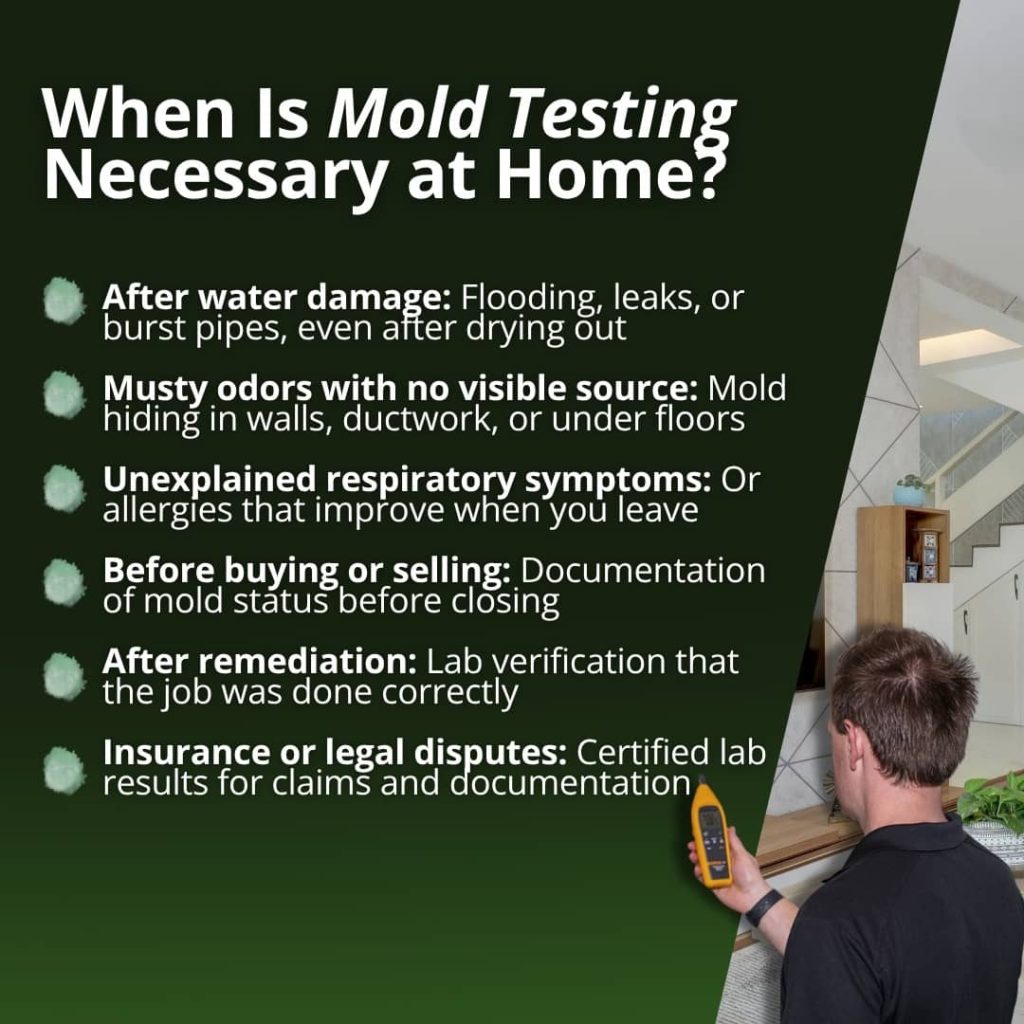
After Water Damage or Flooding
Mold can start growing within 24 to 48 hours of a water event. Once materials dry out, the surface may look fine while mold is actively growing inside wall cavities, under flooring, or behind insulation. Testing after a flood, burst pipe, or roof leak tells you whether growth occurred and how far it spread before you close up the walls.
In Central Florida, where heavy summer rain and hurricane season bring regular flooding events, this is one of the most common reasons homeowners contact us.
You Smell Mold but Cannot Find It
A musty, earthy odor that persists after cleaning is one of the clearest signals of hidden mold. Mold growing behind drywall, inside HVAC ductwork, or under carpet padding can produce a strong odor long before it becomes visible.
Air sampling identifies the type and concentration of spores in the affected area, which points toward where the growth is located.
Unexplained Health Symptoms at Home
If family members are experiencing ongoing respiratory issues, allergic reactions, or symptoms that improve when they leave the house and return when they come home, elevated indoor mold levels could be a factor. This is especially relevant in households with young children, elderly residents, or anyone managing asthma or a compromised immune system.
Air quality testing in these situations measures mold spore counts compared to outdoor baseline levels. If indoor concentrations are significantly higher, or if certain species appear indoors but not outside, that points to active growth somewhere in the building.
Before Buying or Selling a Home
A standard home inspection does not include mold assessment. If you are buying an older home in the Orlando area or anywhere across Central Florida, a professional mold inspection before closing gives you a full picture of what you are purchasing. For sellers, having a clean mold report on hand builds buyer confidence and can remove a point of negotiation.
Pre-purchase mold testing also matters when a home has been vacant for an extended period. Stagnant air and undiscovered leaks create ideal conditions for mold to establish itself in hidden areas.
After a Mold Remediation Project
Post-remediation verification testing confirms that a remediation project was completed successfully. This is one of the few situations where the EPA notes that surface sampling is genuinely useful. The goal is to document that mold levels have returned to normal and that the remediation contractor completed the job correctly.
Homeowners should note that the testing and remediation should be handled by separate companies to avoid a conflict of interest. Elite Mold Services performs post-remediation verification as an independent assessment.
Insurance Claims or Legal Documentation
When an insurance claim or legal dispute involves mold, a visual assessment alone rarely holds up. Lab-certified results from an accredited third-party laboratory provide documentation that carries weight in both contexts.
The report identifies the species present, concentration levels, and affected areas, which is exactly what adjusters and attorneys need to evaluate a claim.
When You Probably Do Not Need Mold Testing
If mold is clearly visible, remediation is the priority, not testing. The EPA is direct on this point: seeing mold is already your answer. Spending money on testing before remediation when the problem is obvious delays the fix without adding useful information.
You also do not need testing as a routine annual checkup unless your home has a known history of moisture problems. A thorough visual and moisture inspection is a better use of resources and a more reliable way to catch early-stage issues.
Additionally, testing alone cannot tell you what to do next. Without a proper inspection to identify the source of moisture, a test result with high spore counts leaves you with data but no action plan.
DIY Kits vs. Professional Mold Testing
At-home mold test kits may be widely available, but they have real limitations. Most kits use a petri dish left out in the air for a set period, then mailed to a lab. The results can confirm that mold spores are present, but they cannot tell you the concentration, whether levels are elevated above outdoor norms, or where the source of growth is.
Professional testing uses calibrated air pumps, spore trap cassettes, and accredited laboratory analysis with outside baseline comparisons. The difference matters when you need actionable results.
For Central Florida homeowners dealing with humidity levels that regularly push above 70%, a whole-home indoor air quality assessment gives you a full picture that a DIY kit simply cannot provide.
Related Questions to Explore
How long does it take for mold to grow after water damage? Mold can begin growing within 24 to 48 hours of a water event under the right conditions: temperatures between 60 and 80 degrees Fahrenheit, a food source like drywall or wood, and relative humidity above 60 percent. Florida’s climate means those conditions are often met quickly. For more on what happens after mold is removed, read our guide on what comes after mold remediation for your Florida home.
Does mold testing show what type of mold is present? Yes. Laboratory analysis of air or surface samples identifies mold down to the genus and species level. Knowing the species matters for remediation planning and for assessing health risks. Some species, like Stachybotrys (commonly called black mold), produce mycotoxins that pose greater concerns for sensitive individuals.
Is mold inspection the same as mold testing? No. A mold inspection is a physical assessment of your property, including a moisture investigation, thermal imaging where warranted, and visual evaluation of problem areas. Testing is the collection and lab analysis of samples. At Elite Mold Services, inspection always comes before testing because the inspection guides which samples are needed. Learn more about the process on our mold testing service page.
How often should you test your home for mold? There is no single recommended interval. Annual testing is not necessary for most homes. Testing makes sense after a moisture event, following remediation, before a real estate transaction, or when health symptoms appear. Homes with a history of water damage or in high-humidity climates like Central Florida benefit from periodic professional mold inspections as part of regular home maintenance.
When to Call a Professional
Call a certified mold assessor when any of the following apply:
- You have had water damage and are unsure whether it was fully dried within 24 to 48 hours
- You can smell mold, but cannot find a visible source
- Family members have persistent respiratory symptoms or allergic reactions that vary depending on whether they are at home
- You are in a real estate transaction and want documentation of the property’s mold status
- Remediation has been completed, and you need verification that it was done correctly
- You need lab-certified results for an insurance claim or legal dispute
Elite Mold Services has served Central Florida since 2006. All inspectors are ACAC and NORMI certified and state licensed. Consultations are free.
For homeowners who have dealt with issues like persistent basement moisture problems, mold testing is often the next logical step after waterproofing work is complete.
Conclusion
Mold testing is a useful tool when used at the right time. If mold is visible, skip the test and focus on remediation. If mold is hidden, suspected, disputed, or part of a real estate or insurance situation, professional testing gives you the documentation and information you need.
Key takeaways:
- Testing is most valuable for hidden mold, post-remediation verification, and pre-purchase assessments
- No federal standard exists for “safe” indoor mold levels, so results need professional interpretation
- Inspection always comes before testing at Elite Mold Services
Ready to find out what is in your home’s air? You can schedule a mold inspection online or get in touch with the team to talk through your situation.