


Getting mold remediation done is a relief. After dealing with the discovery, the stress, and the disruption of the cleanup process, most homeowners just want to move on. But there’s an important step between “remediation is done” and “this home is safe,” and skipping it is one of the more common mistakes people make after mold remediation.
What happens next matters as much as the remediation itself. This post walks through what to expect, what still needs to happen, and how to make sure your home is actually clear before you settle back in.
The Step Most Homeowners Skip
After remediation wraps up, the next step is post-remediation verification, also called clearance testing. A qualified third party who had no involvement in the remediation work conducts this independent inspection and testing process.
The distinction matters. A remediation company confirming their own work is finished is not the same as an independent assessor confirming the work was effective. Post-remediation verification gives you an objective evaluation of whether mold levels returned to normal, whether airborne spore counts meet industry standards, and whether the contractor followed the prescribed remediation protocol.
Elite Mold Services does not perform remediation. That’s intentional, so that we can also provide third-party remediation supervision and post-remediation clearance. For homeowners who want professional eyes on the entire process from start to finish, supervision and post-remediation verification together cover every stage.
When the company conducting your clearance test has no financial stake in the remediation outcome, you get a result you can truly rely on.
What Post-Remediation Verification Really Checks
A thorough clearance assessment isn’t just a visual walkthrough. It combines several evaluation methods to build a complete picture of the home’s condition after remediation.
| Component | What It’s Looking For |
| Visual inspection | No remaining visible mold, containment properly removed, affected areas clean and fully dry |
| Moisture readings | No elevated moisture in walls, ceilings, or floors that could fuel regrowth |
| Air sampling | Airborne spore counts at or below outdoor baseline levels |
| Surface sampling | No mold contamination remaining on tested surfaces |
All of this goes into a written clearance report. If the home is cleared, you have formal documentation that it met industry clearance standards at the time of testing. If something doesn’t pass, the remediation contractor must correct the deficiency before a retest.
That last scenario is more common than people expect, and it’s exactly why independent verification exists.
How Florida Changes the Stakes
Central Florida’s climate doesn’t offer much of a buffer after remediation. Humidity stays elevated across the Orlando metro and surrounding counties for most of the year. That moisture doesn’t disappear just because remediation is complete.
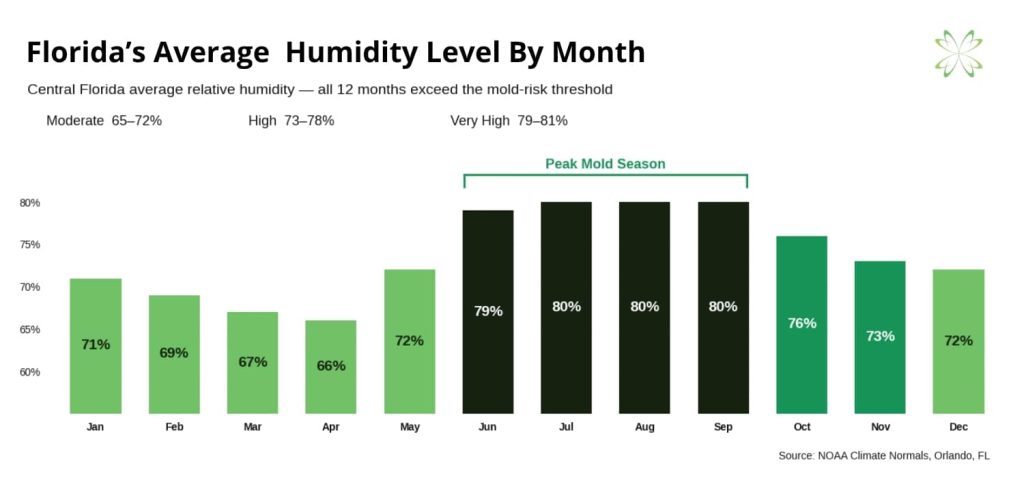
If the contractor didn’t fully resolve the underlying moisture source, or if building materials weren’t dried to proper standards before reconstruction, conditions for mold regrowth can develop within weeks.
Florida homeowners also contend with summer storm season, periodic flooding, and HVAC systems that shift indoor humidity. Any of these factors can reactivate a mold problem in a recently treated space.
Clearance testing isn’t just a formality here. It’s a documented checkpoint that confirms the home is safe before you rebuild, repopulate, or move on.
After Clearance: What Still Needs to Happen
Passing post-remediation verification is a milestone, not a finish line. Homeowners should address several things in the weeks following clearance.
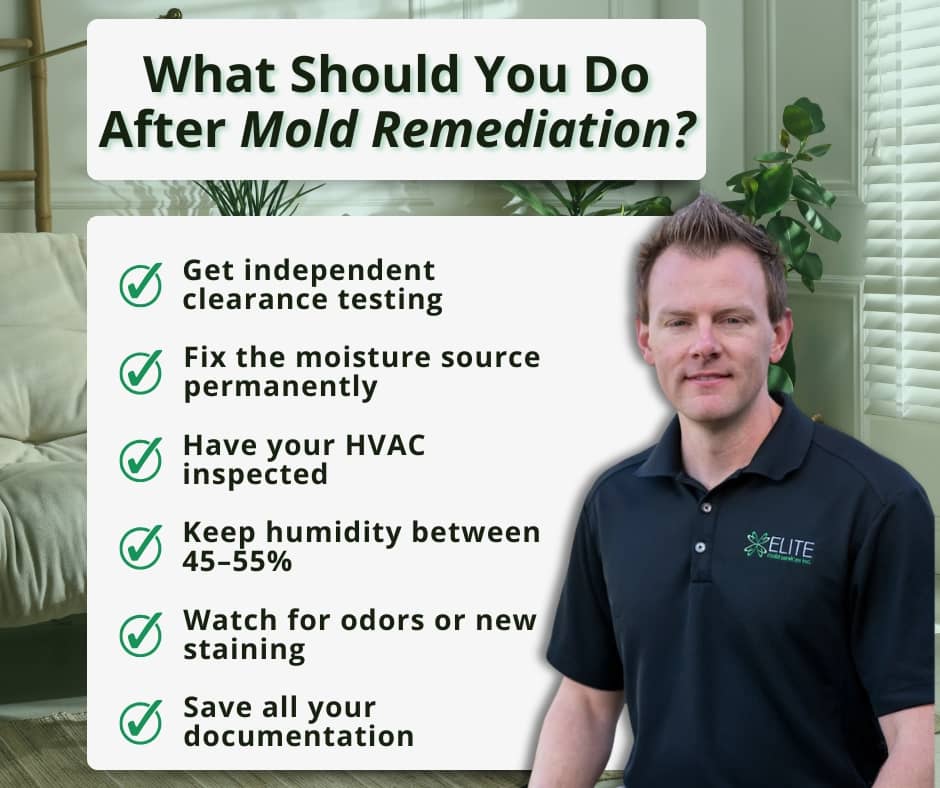
- Fix the moisture source permanently: Whether mold originated from a roof leak, a plumbing failure, inadequate ventilation, or HVAC condensation, that issue needs a permanent fix. Remediation without moisture control is a temporary solution at best.
- Don’t rush reconstruction: If walls, flooring, or other materials came out during remediation, wait for clearance results before rebuilding. Enclosing an area that hasn’t passed verification seals potential problems in and makes them harder to detect later.
- Evaluate your HVAC system: Mold spores travel through ductwork. Systems running during an active mold problem can carry contamination to other areas of the home. If the affected area is tied to a particular zone or unit, get that system evaluated.
- Monitor humidity levels: A basic hygrometer gives you ongoing insight into indoor conditions. In Florida, keep indoor humidity between 45% and 55%. Anything consistently above 60% creates conditions favorable for mold growth, regardless of how thorough the remediation was.
- Hold onto your documentation: The remediation report, clearance results, contractor invoices, and photos all have value. If you sell the home, file an insurance claim, or deal with a recurrence later, that paper trail matters.
What If a Home Doesn’t “Pass” a Post-Remediation Check
“Failing” a clearance test doesn’t mean remediation starts over from scratch. It means something specific was missed or not completed to standard, and the remediation contractor needs to address it.
Common reasons a home doesn’t pass include incomplete removal of contaminated materials, inadequate containment that lets spores spread, insufficient drying before reconstruction, or a moisture source the contractor didn’t identify and correct during the project.
Once the contractor makes corrections, the team schedules a retest. The process repeats until the home passes. A written clearance report documenting the deficiency gives you a clear, straightforward basis for that conversation.
A Note on Mold Illness and Ongoing Health Concerns
For some households, mold remediation follows weeks or months of unexplained symptoms. Respiratory irritation, persistent headaches, fatigue, and allergy-like symptoms are common complaints tied to indoor mold exposure. They don’t always resolve the moment remediation finishes.
If household members still experience symptoms after remediation and clearance, broader indoor air quality testing can help identify other contributing factors in the home. Standard mold clearance testing doesn’t evaluate volatile organic compounds, bacteria, particulate matter, or allergens.
For households where health concerns drive the process, a more comprehensive environmental assessment gives a fuller picture of what’s in the air.
Related Questions to Explore
Can mold come back after remediation? Yes, if the moisture source wasn’t fully resolved. Mold spores are always present in the environment. When moisture returns to a susceptible area, mold can return with it. Clearance testing confirms the home met standards at a point in time. Controlling moisture long-term is what prevents recurrence.
What’s the difference between mold testing and post-remediation verification? Mold testing typically happens before remediation to identify what’s present, where it is, and how significant the problem is. Post-remediation verification happens after the work is done to confirm it was effective. Both involve sampling and professional assessment, but they serve different purposes at different stages.
What does indoor air quality testing check for beyond mold? Indoor air quality testing evaluates volatile organic compounds, particulate matter, bacteria, carbon dioxide, and other airborne contaminants. For homeowners who want a complete picture of what they’re breathing after remediation, or for households with ongoing health concerns, a broader air quality assessment goes further than clearance testing alone.
Is post-remediation verification required in Florida? It isn’t always a legal requirement for residential properties, but lenders, insurers, and buyers typically require it when a home with a mold history goes up for sale or refinancing. More practically, it’s the only way to confirm with documentation that the remediation actually worked.
When to Call a Professional
Schedule post-remediation verification as soon as the remediation contractor indicates the work is complete, ideally before containment barriers come down. Beyond clearance testing, reach out to Elite Mold Services if you are:
- Unsure whether a previous remediation was completed correctly
- Noticing musty odors or health symptoms returning after remediation
- Seeing new staining or moisture signs in a previously treated area
- Selling or refinancing a home with a known mold history
- Dealing with an insurance claim that requires third-party clearance documentation
- Concerned about overall indoor air quality beyond mold alone
Elite Mold Services serves homeowners and property managers across Central Florida, including Orlando, Orange, Osceola, Seminole, Lake, Volusia, and surrounding counties.
Conclusion
Mold remediation is an important step, but it’s not the finish line. Post-remediation verification closes the loop, and in Florida’s climate, skipping it is a gamble that rarely pays off.
Whether you need clearance testing, indoor air quality evaluation, or guidance on what comes next after a mold problem, Elite Mold Services provides independent assessments with no conflict of interest and no shortcuts.
Schedule your testing, inspection, or post-remediation verification today.