
HomeEnvironmental ServicesPost-Fire Combustion Byproduct Testing

Post-Fire

Combustion Byproduct Testing

After the Fire is Out: Elite Mold Services’ Combustion Byproduct Testing throughout Central Florida.

State-certified lab

FL DOH · NELAP

Results in days

Not weeks

Plain-English report

No upselling

Post Fire Testing

Residential and Commercial Services

Has your home or business suffered a recent fire?

At a glance If your Orlando or Central Florida property has suffered fire damage, trust Elite Mold Services to help ensure your indoor environment is clean, safe, and ready for you to return with confidence

Fire damage can have lasting consequences that extend well beyond the visible destruction caused by flames. While structural damage is often the primary concern following a fire, smoke residue and combustion byproducts can remain throughout a property long after the fire has been extinguished. Fine soot particles, ash, char residue, volatile organic compounds (VOCs), and other potentially hazardous contaminants can settle on surfaces, infiltrate HVAC systems, and remain suspended in the air, creating ongoing indoor air quality concerns. Exposure to these contaminants may contribute to respiratory irritation, allergic reactions, headaches, and other health issues, making professional environmental testing an important step before reoccupying a home or commercial building.

At Elite Mold Services, we understand the importance of restoring a safe, healthy indoor environment for homeowners, business owners, property managers, insurance professionals, and restoration contractors throughout Central Florida. We provide comprehensive pre- and post-fire damage testing for combustion byproducts in Orlando and the surrounding communities, including Orange, Seminole, Osceola, Lake, Polk, and Volusia counties. Our experienced indoor environmental professionals utilize advanced testing equipment and proven assessment methods to evaluate the presence of soot, airborne particulate matter, combustion residues, and other contaminants that may remain after a fire.

Pre-remediation testing establishes a baseline of contamination before cleanup begins, helping restoration professionals develop an effective remediation strategy. Once restoration is complete, post-remediation verification testing confirms whether combustion byproducts have been successfully removed and whether indoor air quality has been restored to acceptable conditions. This independent verification provides valuable documentation for property owners, insurance claims, and peace of mind that the property is ready for safe occupancy.

Whether your property has experienced a small kitchen fire, electrical fire, appliance malfunction, HVAC fire, or a major structural fire, Elite Mold Services delivers thorough environmental testing designed to identify hidden contamination that may not be visible to the naked eye. Our detailed reports provide clear findings and professional recommendations, allowing you to make informed decisions about the next steps in the restoration process. If your Orlando or Central Florida property has suffered fire damage, trust Elite Mold Services to help ensure your indoor environment is clean, safe, and ready for you to return with confidence.

What is Post-Fire Combustion Byproduct Testing?

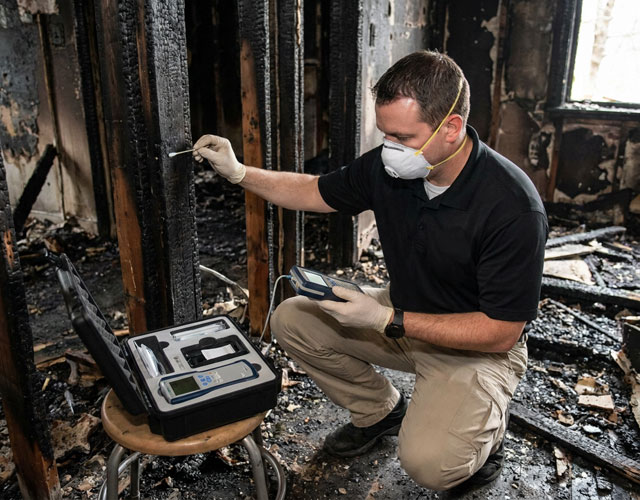
When you hire Elite Mold Services to perform a post-fire evaluation, we will perform a detailed visual inspection of the property to help identify areas that have been affected by not only the fire itself but the byproducts of the fire. These can include soot and smoke damage, odors, chemicals related to the fire fighting process, moisture damage, and more. We will document the property with digital photos, collect moisture readings throughout and be prepared to collect samples in questionable areas where the fire has impacted the property.

We serve residential and commercial properties in Orlando and the Central Florida area. Typically, a pre and post inspection is recommended to ensure a quality project from start to finish.
Contaminants are evaluated during post-fire testing

During post-fire combustion byproduct testing, Elite’s environmental professionals evaluate a variety of contaminants that may remain after a fire, smoke event, or fire suppression activities. Although the visible damage may appear limited, microscopic combustion residues can spread throughout a property and impact indoor air quality. Testing may assess for contaminants such as:

  • Soot and smoke residue – Fine carbon-based particles created during combustion that can settle on walls, ceilings, furniture, and HVAC components.
  • Ash and particulate matter – Airborne and settled particles generated from burned materials that may continue circulating through the indoor environment.
  • Combustion byproducts – Chemical compounds produced when materials such as plastics, wood, insulation, and synthetic materials burn.
  • Volatile Organic Compounds (VOCs) – Chemical vapors that may be released from burned building materials, furnishings, plastics, adhesives, and household products.
  • Fine airborne particles (PM2.5 and PM10) – Microscopic particles that can remain suspended in the air and may contribute to respiratory irritation and reduced indoor air quality.
  • Polycyclic Aromatic Hydrocarbons (PAHs) – Chemical compounds that can form during incomplete combustion of organic materials.
  • Heavy metals and toxic residues – Depending on what materials burned, testing may identify residues from metals, electronics, treated materials, or other fire-damaged contents.
  • Odor-causing compounds – Persistent smoke odors may indicate remaining contamination from combustion gases and residues.
  • Chemical residues from fire suppression efforts – Water, foam, and other extinguishing agents may introduce additional contaminants requiring evaluation.

Why Choose Elite Mold Services for Post-Fire Combustion Byproduct Testing?

Experienced Professionals -

Our inspectors are licensed and insured, with extensive training in identifying and assessing mold growth and other IAQ concerns.

Advanced Testing Methods -

We utilize state-of-the-art equipment and cutting edge laboratories to accurately identify and quantify soot, ash, and other combustion byproducts.

Clear Communication -

We’ll explain the testing process thoroughly and provide a detailed report outlining the results and recommendations.

Peace of mind -

Knowing your property is free of harmful contaminants allows you to focus on rebuilding with confidence while keeping the occupants safe.

Questions business owners ask before booking.

Don’t see yours? Call 407-753-6341 — a real person picks up.

What is post-fire combustion byproduct testing?
Post-fire combustion byproduct testing is an environmental assessment performed after a fire to determine whether harmful residues remain inside a home or commercial building. The testing evaluates for contaminants such as soot, ash, char particles, combustion residue, and fine airborne particulates that may continue to affect indoor air quality even after cleanup has been completed.
Why is post-fire testing important after fire restoration?
Even after a property has been cleaned and repaired, microscopic combustion particles can remain hidden in HVAC systems, wall cavities, insulation, and on building surfaces. Post-fire testing verifies whether restoration efforts have successfully removed these contaminants and helps ensure the property is safe for occupants to return.
What types of contaminants are evaluated during post-fire testing?
A comprehensive post-fire assessment may evaluate for soot, smoke residue, airborne particulate matter, combustion byproducts, volatile organic compounds (VOCs), surface contamination, and other pollutants produced during a fire. The specific testing performed depends on the type and severity of the fire.
Can harmful combustion particles remain after professional cleaning?
Yes. Even with professional restoration, microscopic combustion particles can remain in areas that are difficult to access, including HVAC ductwork, attics, crawl spaces, insulation, and porous building materials. Professional testing helps identify any remaining contamination that may require additional cleaning or remediation.
Can post-fire combustion byproduct testing help with insurance documentation?
Yes. Independent environmental testing provides objective documentation of the property’s condition following restoration. The findings may assist property owners, restoration contractors, and insurance adjusters by documenting whether combustion-related contaminants remain or if cleanup objectives have been achieved.
Why choose Elite Mold Services for post-fire combustion byproduct testing?
Elite Mold Services’ qualified indoor environmental professionals use specialized equipment, established testing protocols, and extensive experience to evaluate the property for residual combustion contaminants. Elite’s professional testing provides accurate, unbiased results and detailed reports that help homeowners and businesses make informed decisions about additional cleaning, restoration, or safely reoccupying the building.

Serving all of Central Florida.

Orange, Seminole, Brevard, Hillsborough, Lake, Marion, Osceola, Polk, Sumter and Volusia counties — including Winter Park, Winter Garden, Apopka, Clermont, Lakeland, Maitland, Sanford, Deland, Oviedo, Lake Mary, Altamonte Springs, and Daytona Beach.

Elite Mold Service Areas