
InterNACHI
Certified IAQ Inspector
Why Measure Particulate Matter?
What are typical sources of Particulate Matter?
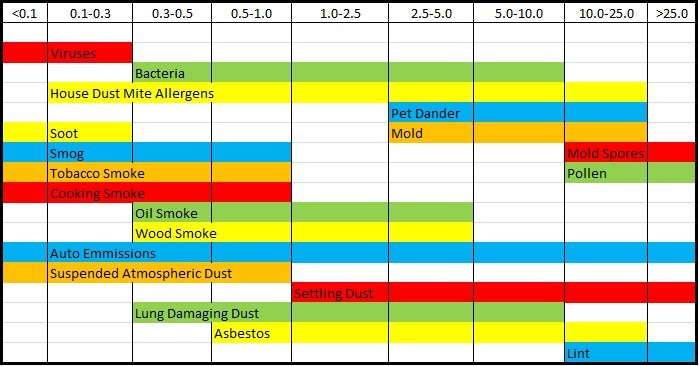
From outdoor sources; respirable particles that are 2.5-10 µm, and course, inhalable, suspended particles that are 10 -25 µm+, are found near roadways and dusty industries. Fine particles, those that are 2.5 µm and smaller, are usually the result of smoke and haze (forest fires, gases from power plants, industries, and motor vehicles).
Mold spores and fragments are microscopic (2-25 µm) and are naturally present in both indoor and outdoor air. Molds reproduce by means of spores. Some molds have spores that are easily disturbed and waft into the air and settle repeatedly with each disturbance. Other molds have sticky spores that will cling to surfaces and are dislodged by brushing against them or by other direct contact. If the particulate levels are elevated in this mold range, mold sampling can be performed to help determine what type and level of mold is present within the occupied spaces.
Here is a simple chart to show common sizing of various particulate:
- Increased respiratory symptoms, such as irritation of the airways, coughing, or difficulty breathing; i.e.
- Decreased lung capacity
- Aggravated asthma
- Development of chronic bronchitis
- Irregular heart beat
- Non-fatal heart attacks
- Premature death of people with heart or lung diseases
Establishing a baseline of particulate data to compare to when complaints arise, or when construction is in progress or after changes have been made to an occupied space can provide valuable information to a Facility Manager, Building Owner or IAQ investigator.
In some cases, tracking increasing particulate levels may be used to “bloodhound” a source of airborne particulate. Elevated particulate, in the absence of a known source, may also indicate justification for air sampling, to be sent out for detailed laboratory analysis of the chemical composition of the particles.
Elite Mold Services
Why choose our Particle Counting (PM) services?

Fast Turnaround Times

Experienced Technicians

Accurate and Reliable Results

Affordable Pricing
FAQ
Questions homeowners ask before booking.
Don’t see yours? Call 407-753-6341
What is indoor particle counting (particulate matter) testing?
Who should consider indoor particulate matter testing in Central Florida?
Does high humidity in Central Florida affect indoor particle levels?
Will indoor particle counting identify the exact type of particles in my home?
Can outdoor air pollution affect indoor particle counts?
Why choose Elite Mold Services for OSHA indoor air quality complaint investigations?
Proudly serving all of Central Florida.
Cities
Testimonials
What Our Clients Say