


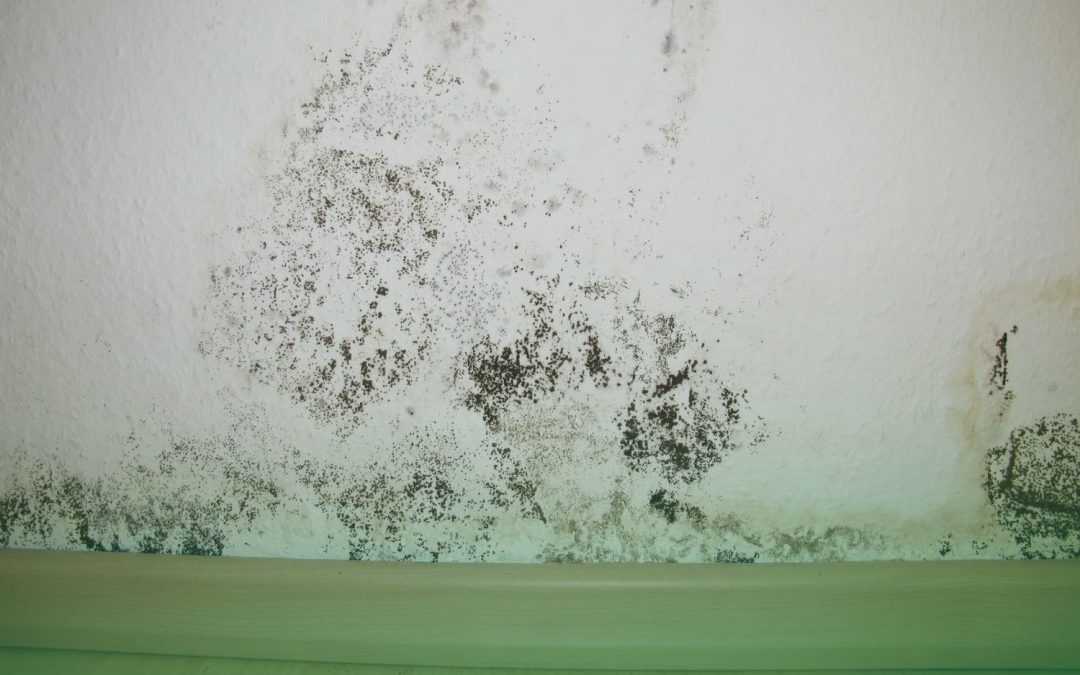
Florida’s warm, humid climate makes it one of the easiest places in the country for mold to grow, and a handful of types show up again and again in local homes: Cladosporium, Aspergillus, Penicillium, Alternaria, and the one everyone worries about, Stachybotrys (the usual “black mold”).
Here is the catch most homeowners do not realize: you cannot reliably tell one type from another, or how risky it is, just by looking. Color and location give clues, but only lab testing confirms the species.
This guide covers the molds most common in Florida homes, which ones actually pose a health risk, and what to do if you find growth.
Why Are Florida Homes Prone to Mold?
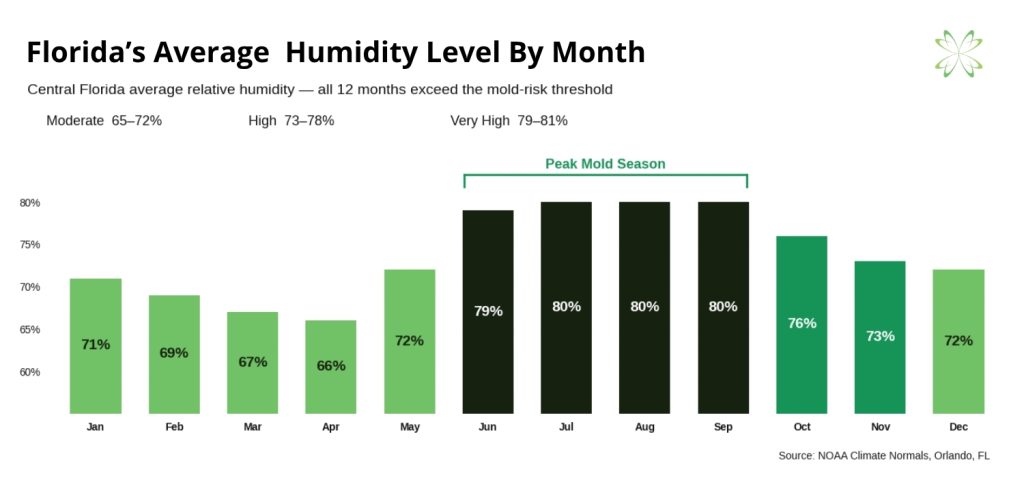
Mold needs three things to grow: moisture, a food source, and time. Florida hands it the first one for free. High year-round humidity, frequent rain, and constant air conditioning create condensation, damp materials, and the kind of steady moisture mold loves.
Add a slow plumbing leak, a roof issue, or an AC drain pan that stays wet, and a home can grow mold in as little as a day or two. That is why the same short list of molds turns up in home after home here. They are simply the species best suited to a warm, humid environment.
Controlling indoor humidity is your best defense, which is also why something as ordinary as a humidifier can backfire if it is overused.
The Most Common Types of Mold in Florida Homes
Rather than memorize dozens of species, it helps to know the ones you are most likely to encounter and where they tend to hide. Here are the most common molds found in Central Florida homes:
| Mold | Typical look | Where it shows up |
|---|---|---|
| Cladosporium | Green, brown, gray, or black; velvety or powdery | Damp, low-light, poorly ventilated spots |
| Aspergillus | Varies; often black on top, white or yellow underneath | Warm, humid areas throughout the home |
| Penicillium | Blue-green or gray-green | Water-damaged materials, carpet, insulation |
| Alternaria | Black, gray, or olive; suede or woolly texture | Showers, sinks, around AC units |
| Aureobasidium | Black or pink, darkening with age | Painted surfaces, caulk, wood |
| Acremonium | White, orange, pink, or gray; powdery | Humidifiers, cooling coils, AC drain pans |
| Chaetomium | White at first, then gray or olive | Chronically water-damaged drywall and wood |
| Stachybotrys (“black mold”) | Dark greenish-black; slimy or shiny | Long-term water damage on paper, drywall, fiberboard |
A few, like Aspergillus and Penicillium, are extremely common. Stachybotrys is far less common than the panic around “black mold” suggests, and it usually signals a long-standing moisture problem rather than a quick spill.
Can You Identify Mold by Its Color or Look?
Not reliably, and this is the single biggest misconception about household mold. Color is a weak clue: many different molds can appear black, green, or gray, and the same species can change color as it matures. “Black mold” is not one thing. Stachybotrys, Cladosporium, Aspergillus, Alternaria, and others can all look dark on a wall.
The only way to confirm which mold you have, and how much, is a sample analyzed by a lab. Hardware-store test kits hit the same wall, which is why they so often mislead homeowners. Professional mold testing matches the method to the situation:
- Air sampling compares spore levels inside versus outside to flag an indoor problem.
- Swab and bulk sampling identify mold on a visibly affected surface or material.
- Wall-cavity sampling checks for hidden growth inside a wall without tearing it open.
- Culturable samples are grown out in the lab to pin down the exact species (speciation).
- ERMI testing is a DNA-based method developed by the EPA that analyzes household dust to reveal which species are present, in what amounts, and whether a home has had long-term mold conditions.
- EMMA testing goes further, screening for both toxigenic molds and the mycotoxins they can produce, which helps when someone in the home has unexplained health symptoms.
Here is the honest part a good inspector will tell you: lab results alone do not find the moisture feeding the mold. The numbers only mean something when read alongside a hands-on inspection, moisture readings, and thermal imaging that show where water is actually getting in. That is why the right approach uses advanced testing selectively, when it adds real clarity, rather than by default.
Which Types of Mold Are Actually Dangerous?
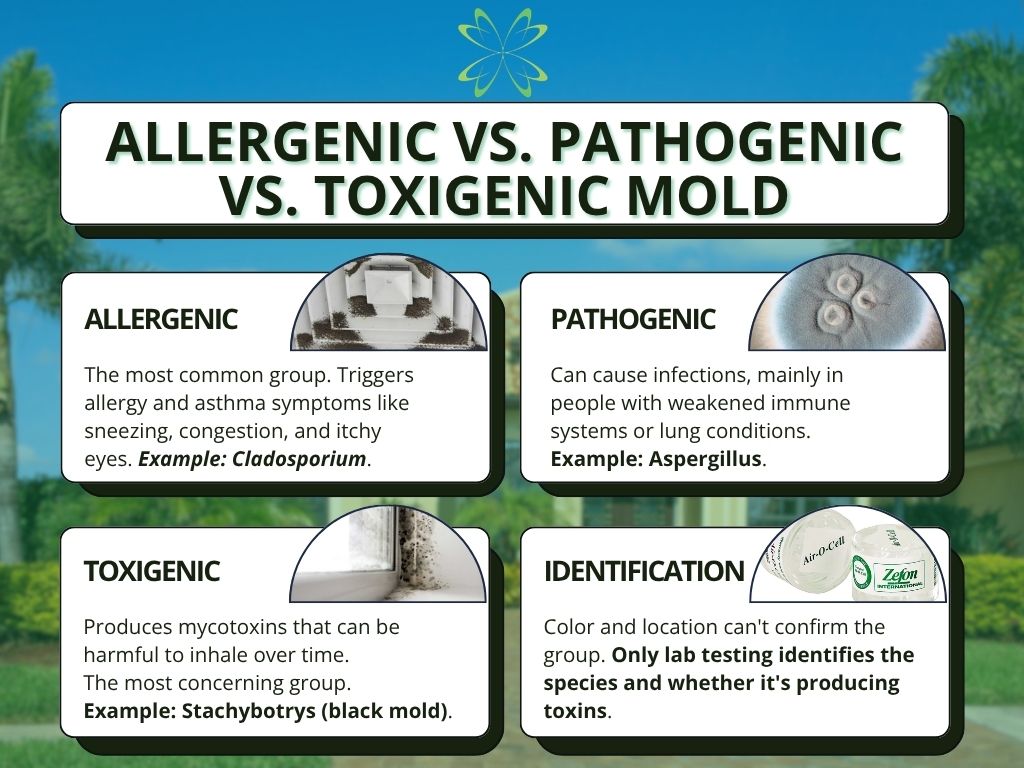
Most household mold falls into one of three groups, and the group matters more than the color:
- Allergenic molds are the most common. They trigger allergy and asthma symptoms: sneezing, congestion, itchy eyes, and skin irritation. Cladosporium, Alternaria, and many Aspergillus and Penicillium species fall here. Allergen testing can pinpoint what is affecting sensitive family members.
- Pathogenic molds can cause infections, mainly in people with weakened immune systems or existing lung conditions. Aspergillus, Fusarium, and Mucor are examples.
- Toxigenic molds produce mycotoxins, compounds that can be harmful to inhale over time. Stachybotrys and certain Aspergillus, Penicillium, and Chaetomium species belong here.
Two things are worth stressing. First, exposure affects people differently: infants, older adults, and anyone with asthma or a compromised immune system are most at risk, and children can show symptoms that are easy to mistake for a lingering cold. Second, no mold belongs growing indoors in quantity. Even a “harmless” allergenic mold means you have a moisture problem worth solving.
What to Do If You Find Mold in Your Home
If you spot growth, a musty smell, or unexplained allergy symptoms indoors, here is a calm, practical order of operations:
- Do not disturb it. Scrubbing or knocking loose visible mold sends spores through the air and can spread the problem.
- Find and stop the moisture. Mold is a symptom. A leak, high humidity, or condensation is the cause, and it will come back until that is fixed.
- Get it inspected and tested. A professional identifies hidden growth behind walls or in the HVAC system and confirms the type and extent through lab testing.
- Follow a clear remediation plan. Testing tells you what you are dealing with so remediation is targeted rather than guesswork, and post-remediation verification confirms it actually worked.
For context on the moisture side of the equation, the EPA’s homeowner guide to mold and moisture is a solid, plain-language reference. And if you are on the fence about whether your situation warrants testing, these signs that point to professional testing can help you decide.
Post-storm and post-leak water intrusion is one of the most common ways mold takes hold, so drying out a home quickly matters. A dehumidifier can help control the humidity that feeds it. If mold turns up during a real estate transaction, a documented inspection protects everyone involved.
Related Questions to Explore
What is the most common type of mold in homes? In Florida, Cladosporium, Aspergillus, and Penicillium are among the most common because they thrive in warm, humid conditions. They can trigger allergies even when they are not the toxic type people fear.
Is all black mold toxic? No. “Black mold” is a look, not a species. Many molds appear black, and only lab testing can tell whether it is Stachybotrys or something far more benign.
Can I identify mold type myself? You can narrow it down by color and location, but you cannot confirm the species or how much is present without a sample analyzed by an accredited lab.
Which molds are dangerous to health? Toxigenic molds like Stachybotrys and pathogenic molds like Aspergillus pose the most risk, especially to children, older adults, and people with asthma or weakened immune systems. Allergenic molds mainly trigger allergy and asthma symptoms.
How do I know if I have mold if I cannot see it? A musty smell, recurring allergy symptoms indoors, or a history of water damage are all signals. Professional inspection and testing can find growth hidden behind walls or in the HVAC system.
When to Call a Professional
Reach out to a licensed mold inspector when:
- You can see or smell mold but cannot find the source
- Someone in the home has unexplained or worsening allergy or respiratory symptoms
- There has been a leak, flood, or long-term humidity problem
- Mold comes up during a home purchase or sale
- You want to know the exact type and extent before paying for remediation
A professional mold inspection uses moisture meters, thermal imaging, and lab-analyzed samples to find what a visual check misses, then gives you a clear report and plan. Elite Mold Services has served Central Florida since 2006 with state-licensed, certified inspectors.
Conclusion
The most common molds in Florida homes are the ones that love our humidity, and while color and location offer clues, only testing confirms what you actually have and whether it is a health concern.
If you have spotted growth, noticed a musty smell, or just want peace of mind, Elite Mold Services can help.
Schedule a mold inspection and get calm, lab-backed answers.