


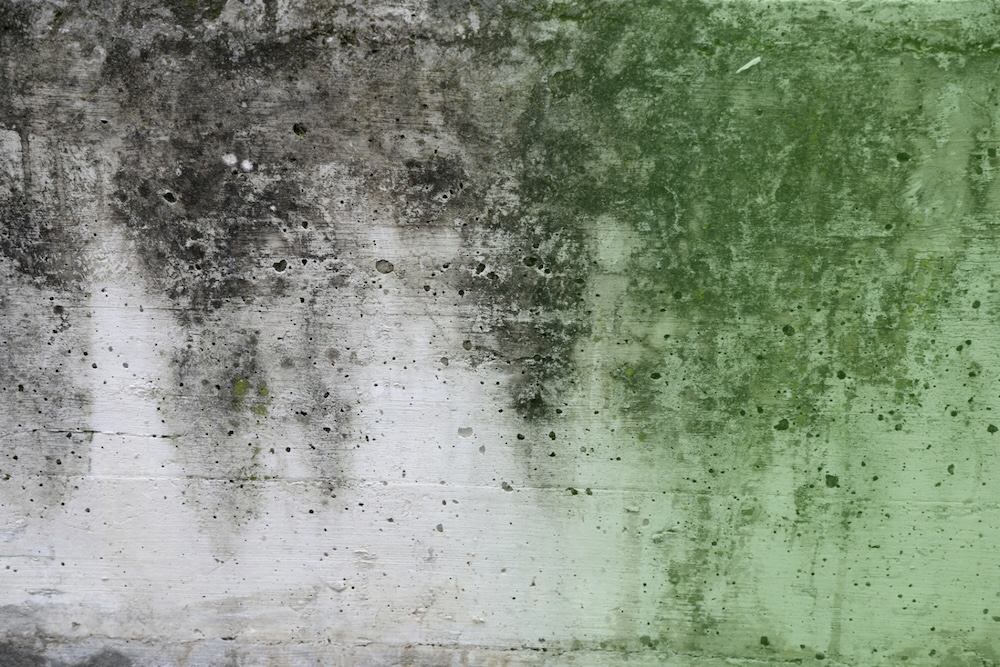
Yes, mold can grow on concrete. Concrete is not food for mold, but the dust, dirt, and moisture that settle on it are. In Central Florida, where humid air and summer rain keep slabs damp, that mix is common.
Licensed inspectors at Elite Mold Services find mold on garage floors, lanai slabs, block walls, and under flooring all the time.
This guide shows how mold ends up on concrete, how to tell it apart from white mineral dust, and when a patch is a DIY job. It also covers what to do when it is not.
Can Mold Grow on Concrete?
Yes. Mold needs three things: moisture, oxygen, and something to eat. Concrete itself is mineral, so it is a poor food source. But a thin film of dust, soil, pollen, and grime sits on almost every slab. Add moisture, and that film feeds mold just fine.
Concrete is also porous. It soaks up water like a hard sponge and lets it go slowly. The EPA explains in its guide to mold, moisture, and your home that mold spores float through the air everywhere, and they start to grow when they land on a damp surface. Without moisture, they stay put.
Here are the spots where we see it most in Central Florida homes:
- Garage floors and the base of garage walls
- Lanai, patio, and pool deck slabs
- Shaded exterior walls and block walls
- Slabs under vinyl plank, tile, or carpet
- Utility closets and spots near AC drain lines
Most homes here are built on a slab instead of over a basement. That means the concrete is often the first surface that gets wet.
What Does Mold on Concrete Look Like?
Mold on concrete usually shows up as dark, green, or white spots or fuzzy patches, often with a musty smell. Color alone will not tell you which type of mold it is.
- Dark spots (black, gray, or brown): These look smudgy or speckled. A dark patch is not automatically “toxic black mold.” Only lab testing can name the species.
- Green or blue-green patches: These look powdery or velvety. They are common on shaded, damp outdoor slabs.
- White patches: These look fuzzy or cottony. They are easy to confuse with mineral deposits (more on that below).
Concrete can host many of the common types of mold found in homes, so color is only a starting clue.
Mold vs. Efflorescence
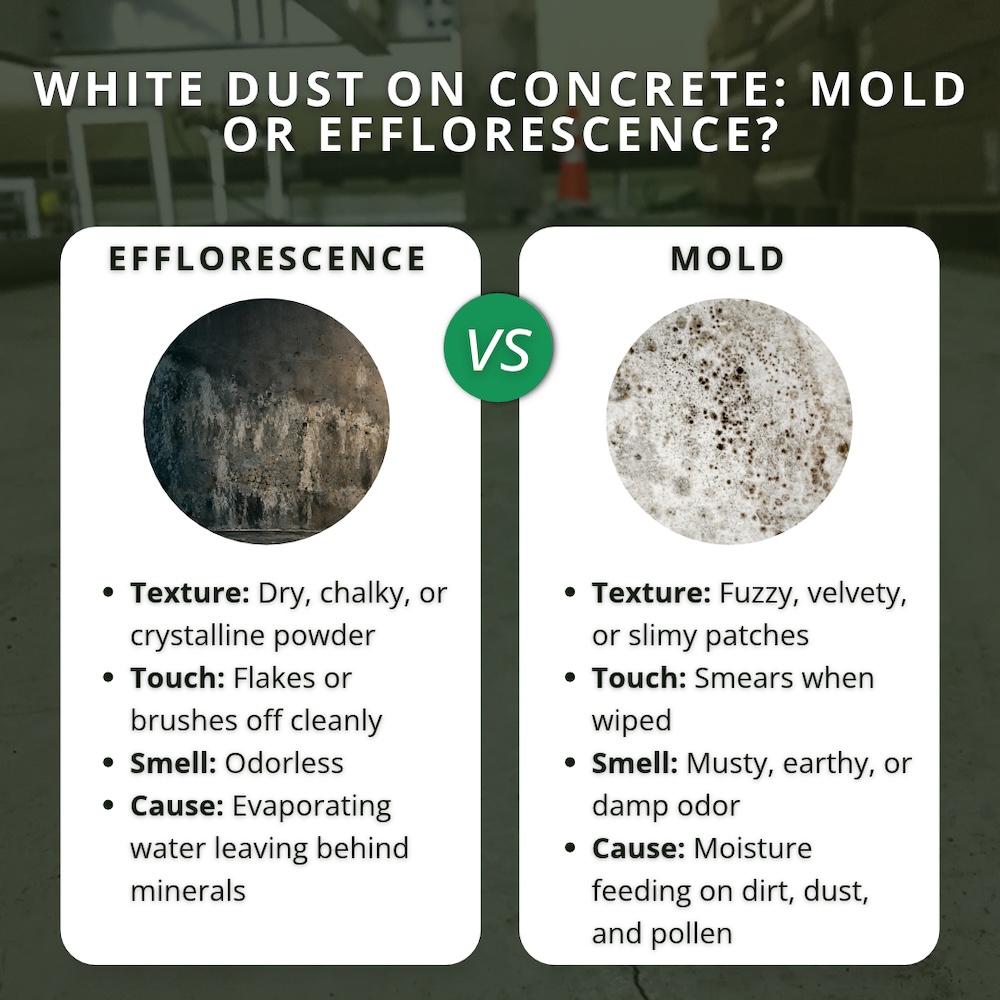
White powder on concrete is often efflorescence, not mold. Efflorescence is a mineral salt left behind when water moves through concrete and evaporates. It is not alive and does not spread like mold.
| Efflorescence | Mold | |
|---|---|---|
| Look | Chalky or crystal-like, white | Fuzzy, spotty, or slimy, any color |
| Smell | None | Often musty |
| When wiped | Usually brushes off as dry powder | Often smears |
| What it means | Water is moving through the concrete | Water is present and something is feeding growth |
Look and smell give clues, not proof. And here is the key point: both mean moisture is getting into the slab. If you are not sure which one you have, a professional evaluation can settle it.
Mold vs. Mildew
Mildew is a common word for mold in its early, flat, surface stage. You treat it the same way: fix the moisture, then clean the surface.
What Causes Mold on Concrete?
Moisture causes mold on concrete. Dirt and low airflow make it worse.
These are the usual sources:
- Humidity and rain. Concrete in damp air stays damp for days. Florida summers give mold plenty of time.
- Poor drainage. The EPA advises keeping gutters clean and making sure the ground slopes away from the foundation. Water that pools along a slab soaks in.
- Leaks. Plumbing leaks and clogged AC drain lines can wet a slab from one spot. The EPA also lists dirty AC drip pans and blocked drain lines as moisture sources.
- Moisture from below. Water vapor can move up through a slab and get trapped under flooring or stored items.
- Shade and still air. Slabs that never see sun or a breeze dry slowly.
- Dirt buildup. Grime gives mold something to eat.
Is Mold on Concrete a Problem?
Yes, it is worth dealing with, even though concrete is tough. The EPA notes that mold gradually destroys the materials it grows on. On a bare slab, that damage is mostly cosmetic.
The bigger concern is what touches the slab: baseboards, drywall, carpet, wood framing, and stored boxes.
Mold can also affect your health. Spores can trigger allergy and asthma symptoms in some people, and dead mold can still cause reactions.
Reactions vary a lot from person to person, and whether mold on concrete is dangerous depends on the type, the amount, and who is exposed.
How to Prevent Mold on Concrete
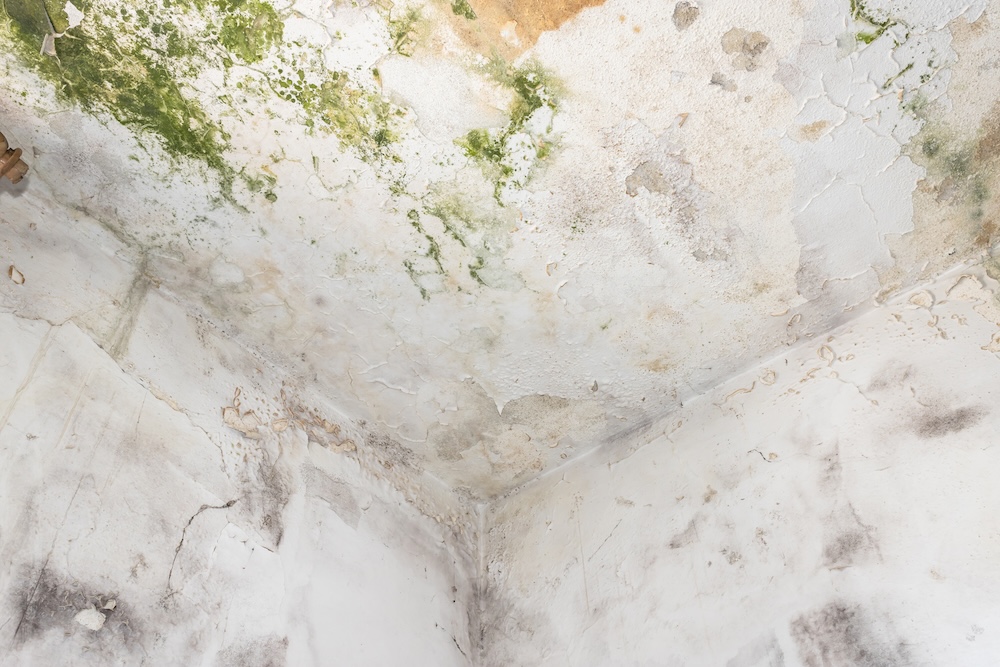
The best way to prevent mold on concrete is to keep it dry. Mold control is moisture control. Follow these steps in order.
- Find and fix the water source first. Repair leaks and clear AC drain lines. Cleaning without fixing the source means mold comes back.
- Dry wet areas fast. The EPA recommends drying wet areas within 24 to 48 hours.
- Send water away from the slab. Clean gutters, extend downspouts, and check that the soil slopes away from your home.
- Watch your humidity. The EPA says to keep indoor humidity below 60%, ideally between 30% and 50%. A hygrometer costs little and shows you the number, and there are several practical ways to reduce humidity in a Central Florida home.
- Add airflow. Run fans, open the garage door on dry days, and keep stored items off the floor and away from walls. Garages are a frequent trouble spot, so mold in the garage is worth checking for regularly.
- Clean on a schedule. Wash concrete with detergent and water, then let it dry completely.
- Seal only clean, dry concrete. A concrete sealer can slow surface moisture. It does not fix a slab that is wet from below. The EPA also warns against painting or caulking over mold, because the paint will likely peel.
Other mold prevention strategies for the home work well alongside these steps.
| What you see | Likely cause | First step |
|---|---|---|
| Dark spots at the base of garage walls | Water pooling outside or a leak | Check grading, gutters, and downspouts |
| Green patches on a shaded patio | Constant dampness and shade | Clean, then improve drainage and sun exposure |
| White powder on a basement or garage wall | Water moving through the concrete | Find the water path before you clean |
| Musty smell under flooring | Moisture coming up through the slab | Test moisture, lift a corner if safe, call a pro |
How to Clean Small Patches of Mold on Concrete
You can usually clean a small patch of mold on concrete yourself. The EPA’s mold cleanup guidance says a patch smaller than about 10 square feet (roughly 3 feet by 3 feet) is generally a job you can handle.
- Protect yourself. The EPA suggests an N-95 respirator, long gloves, and goggles without vent holes.
- Scrub with detergent and water. For hard surfaces like concrete, the EPA says to scrub the mold off.
- Dry the surface completely. A fan or dehumidifier helps.
- Fix the moisture problem. If you skip this step, the mold will return.
The EPA does not recommend bleach for routine cleanup. If you choose to use it, ventilate the area and never mix it with ammonia products. Painted or drywall surfaces are a different case, so it helps to know how to clean mold off walls.
Related Questions to Explore
Does mold grow on concrete?
Yes. Mold grows on concrete when the surface stays damp and holds dust or dirt. The concrete is not the food. The grime on top is.
Can mold grow on a concrete slab?
Yes. Slabs can hold moisture from rain, leaks, and water vapor from the ground. In Central Florida, slab-on-grade homes are common, so slabs are a key area in a Central Florida mold inspection. A mold inspection checks slabs, walls, plumbing areas, and HVAC systems for hidden moisture and growth.
Can mold grow under vinyl flooring on concrete?
Yes. Moisture that moves up through a slab can get trapped under vinyl plank, and mold can grow in that damp, dark space. Signs include a musty smell, flooring that lifts or warps, and dark spots at seams. Because the growth is hidden, mold testing is often the best way to find out what is happening.
What causes green mold on concrete?
Moisture, shade, and dirt cause green mold on concrete. Green growth is common on shaded outdoor slabs that stay damp. The color does not name the species. It only tells you the surface is staying wet.
Will bleach kill mold on concrete?
Bleach may kill surface mold, but the EPA does not recommend it as routine cleanup. Dead mold can still cause allergic reactions, so it needs to be removed, not just killed. Scrubbing with detergent and water, then drying the surface, is the EPA’s approach for hard surfaces.
Will vinegar kill mold on concrete?
Vinegar is a common home remedy, but the EPA’s guidance for hard surfaces is detergent and water plus thorough drying. Whatever cleaner you use, the mold will return if the moisture stays. Fix the water source first.
What is the difference between mold and mildew on concrete?
Mildew is a common name for early, surface-level mold. Both need moisture, and both are handled the same way: fix the moisture, then clean and dry the surface.
When to Call a Professional
Call a professional when the patch is large, keeps coming back, or you cannot find the water source.
Here are the signs it is time:
- The mold covers more than about 10 square feet.
- It returns after you clean it and fix the obvious leak.
- You smell mold but cannot see it, such as under flooring or behind baseboards.
- It has spread to drywall, carpet, or wood.
- Someone in the home has asthma, allergies, or a weak immune system, and symptoms are getting worse.
- You are not sure if the white powder is mold or efflorescence.
In Florida, mold assessors and mold remediators hold separate state licenses. An assessor finds the problem and tells you what needs to happen. A remediator does the cleanup.
Our state-licensed assessors do the first part: we inspect, test, and give you a plain-English report.
Not sure what you are looking at? A licensed mold inspection can give you a clear answer.
Conclusion
Mold can grow on concrete whenever moisture and a little dirt are present, and Central Florida homes offer both. The fix is simple to say and harder to do: find the water, dry the slab, and clean the surface.
- Mold on concrete needs moisture, not the concrete itself.
- White powder may be efflorescence, which still signals a moisture path.
- Small patches can be cleaned with detergent and water. Large, hidden, or recurring growth needs a professional.
Elite Mold Services serves Orlando, Winter Garden, and the surrounding Central Florida counties. If you want an expert to look at your slab, you can schedule a mold inspection today.