



In general, sometimes. In Florida, most of the time. If the home has a history of water damage, a musty smell, visible staining, or an unexplained repair, a mold inspection earns its cost. If none of that is present and nothing turned up in the general inspection, you probably do not need one.
That answer is less satisfying than “always yes,” and it is the honest one. Elite Mold Services has been testing Central Florida homes since 2006, and part of the job is telling people when they do not need us. What follows is how to tell which situation you are in before your inspection contingency runs out.
Your Home Inspection Does Not Inspect for Mold
This surprises almost every buyer, and it is worth being clear about.
The standards of practice that home inspectors work under specifically exclude mold. InterNACHI’s residential standard lists “the presence of mold, mildew or fungus” among the things an inspector is not required to determine. A good general home inspection covers roof, structure, plumbing, electrical, and HVAC thoroughly. Mold is simply not in its scope.
What a home inspector will do is note visible moisture, water staining, or a smell, and tell you to have it looked at. That note in the report is often what sends people here.
So the two are not competing. They answer different questions, and the general inspection usually comes first.
When Is It Smart to Get a Mold Inspection?
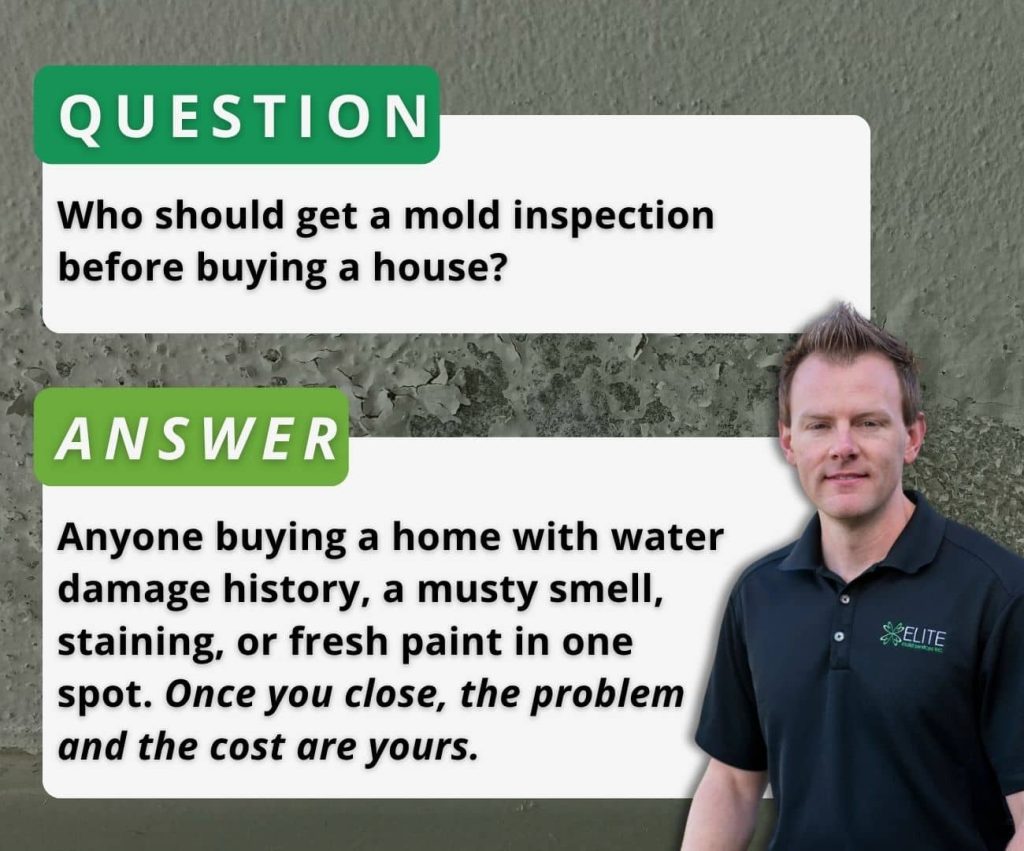
Certain findings move a mold inspection from optional to sensible. Any one of these is a reason to consider a mold inspection:
- A musty or earthy smell anywhere in the house, including closets
- Visible staining on drywall, ceilings, baseboards, or around windows
- A known history of roof leaks, plumbing leaks, or stormwater intrusion
- Fresh paint or new drywall in one isolated area, which can mean a repair nobody disclosed
- An AC system that has been leaking, or condensation around vents and registers
- The house sat vacant with the AC off, which in Florida is enough on its own
- Anyone in your household has asthma or significant allergies
If you can already see mold, testing may not tell you anything useful. The EPA’s own guidance says that “in most cases, if visible mold growth is present, sampling is unnecessary.” You already know there is mold. What you need is to find the water source and get it removed, and a sample does not change either step.
Testing earns its cost when mold is suspected but not visible, when you need to know how far it extends, when someone is having symptoms and the cause is unclear, or when you need documentation for a negotiation.
What Actually Happens During One
A mold inspection is mostly a moisture investigation. Mold is a symptom. Water is the cause, and finding the water is the point.
An assessment typically includes:
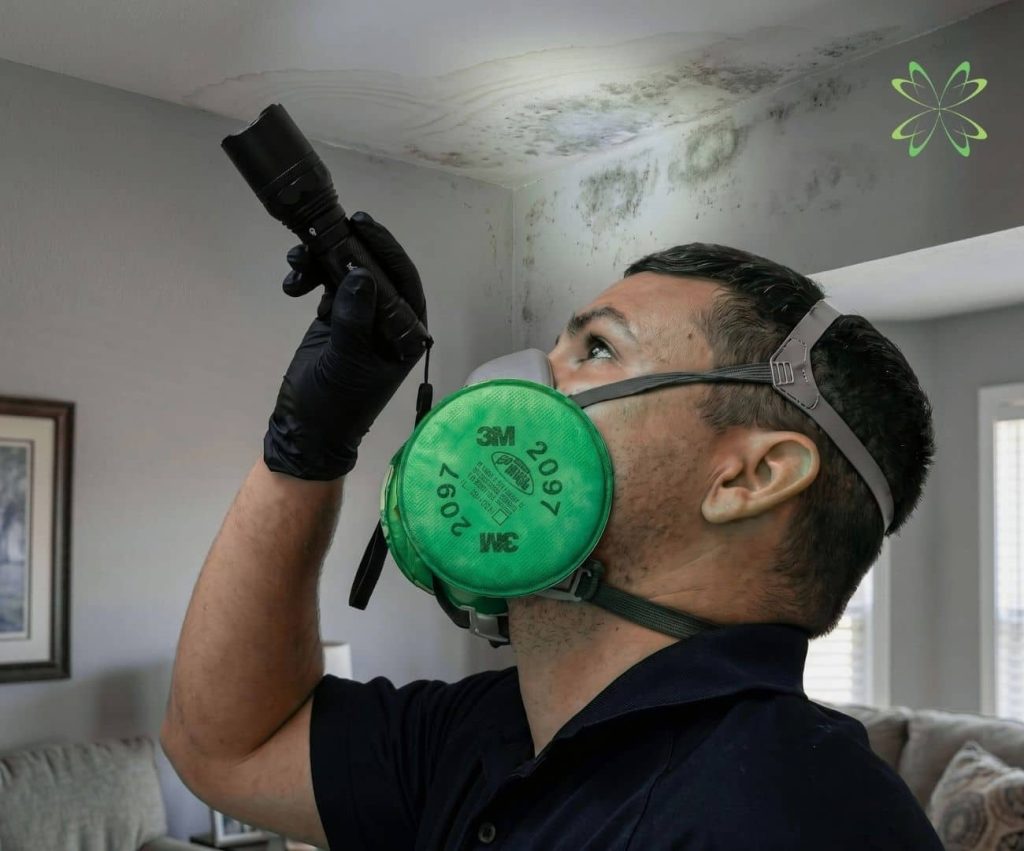
- A visual inspection of the areas where mold hides in Florida homes: under sinks, around the air handler, behind toilets, along exterior wall bases, and in the attic.
- Moisture readings taken in building materials with a meter, which finds wet drywall that looks perfectly dry.
- Thermal imaging to locate cool, damp areas behind finished surfaces without cutting anything open. Infrared scanning is what turns a hunch into a location.
- Sampling, when it is warranted. Air or surface samples go to a lab, and indoor results get compared against an outdoor baseline taken the same day.
- A written report with photos, moisture readings, lab results if samples were taken, and a remediation protocol if one is needed.
That last item matters in a purchase. A verbal “yeah, there’s mold” is not something you can hand to a seller. A written report with documented moisture readings is.
What It Costs
Elite Mold publishes pricing, which is less common in this industry than it should be.
| Package | Starting Price | Scope |
|---|---|---|
| Limited | $229 | One to four rooms, limited moisture and infrared scan, one HVAC unit |
| Complete | $289 | Entire property, full moisture and infrared, HVAC, attic, exterior |
| Post-Remediation | $419 | Verification after remediation, includes two air samples |
Be cautious with the cost figures you will find elsewhere online. Nearly every published range traces back to lead generation marketplaces rather than any neutral source, which is why the numbers swing from $150 to nearly $3,000 depending on which page you land on.
For a home purchase, the Complete package is usually the right call, since you want the whole house evaluated rather than one room.
How Florida Regulates This
Florida licenses mold assessors and mold remediators separately, and the separation is not an accident.
Under state law, a licensed mold assessor cannot perform remediation on a property their company assessed within the previous twelve months. The reverse applies too. The state also prohibits assessors from taking referral payments from remediation companies.
The reason is straightforward. If the company that tells you how bad the problem is also profits from fixing it, the incentive runs the wrong way.
This is why we do not perform remediation. As our own materials put it, “because we don’t provide remediation services, you can trust us to remain impartial, focusing only on the success of your project.” When mold is found, you get a protocol and a scope, and you hire a licensed remediator separately to bid and perform the work.
Worth knowing as a buyer: ask any mold company you call whether they also do the removal. The answer tells you how to read their findings.
Fitting It Into Your Contingency Window
Timing is the part that trips buyers up, because inspection contingencies are short.
Schedule the mold assessment as soon as your general inspection flags something, or at the same time if you already know the house has water history. Lab results on samples typically take a day or two, and you want that turnaround to land inside your window rather than after it.
If the assessment finds a problem, the report gives you three options: ask the seller to remediate before closing, negotiate a credit based on a remediator’s bid, or walk. All three require documentation, which is the real reason to do this before the contingency expires instead of after you have the keys.
Water problems in a house rarely stay in one place, and moisture that starts at the foundation has a way of showing up as a mold question later.
Related Questions to Explore
Does a home inspection include mold testing? No. Mold is excluded from the standards of practice home inspectors follow. An inspector may note visible moisture or a smell and recommend further evaluation.
Who pays for a mold inspection, the buyer or the seller? Usually the buyer, as part of due diligence. If mold is found, remediation cost becomes a negotiation item.
How long does a mold inspection take? Typically one to two hours for a house, depending on size and access. Lab results, when samples are taken, add a day or two.
Can I just use a DIY mold test kit? They will tell you that mold spores exist in your house, which is true of every house. What they cannot do is find the moisture source, tell you how far it extends, or produce a report anyone will negotiate from.
What if the seller already remediated the mold? Ask for the remediation documentation, then consider post-remediation verification. Remediation done without addressing the water source tends to come back.
Is black mold worse than other mold? Any mold growing indoors indicates a moisture problem that needs fixing. Identifying the species matters less than finding the water.
When to Call a Professional
Call when your home inspector flags moisture or staining, when you smell something and cannot find it, when the disclosure mentions past water damage, or when the house has been sitting empty in a Florida summer.
You can skip it when the house is dry, the inspection came back clean, the disclosure is clean, and nobody in your family has respiratory sensitivities. We will tell you that on the phone rather than sell you a test you do not need.
Elite Mold Services covers Orange, Seminole, Brevard, Lake, Osceola, Volusia, Polk, Marion, Sumter, and Hillsborough counties, with offices in Orlando and Winter Garden. Our inspectors are state-licensed mold assessors, and we do not perform remediation.
For background, the EPA’s guidance on mold testing and sampling is the clearest neutral resource available, and InterNACHI’s standards of practice spell out what a general home inspection does and does not include.
Conclusion
The short version for anyone under contract:
- Your home inspection does not cover mold. If you want it evaluated, that is a separate appointment.
- Get one when there is water history, a smell, staining, or a health reason. Skip it when the house is clean and dry.
- Do it inside your contingency window, because a written report is what gives you leverage.
If something turned up on your inspection report and you have a closing date approaching, schedule a mold inspection and find out what you are actually buying.