


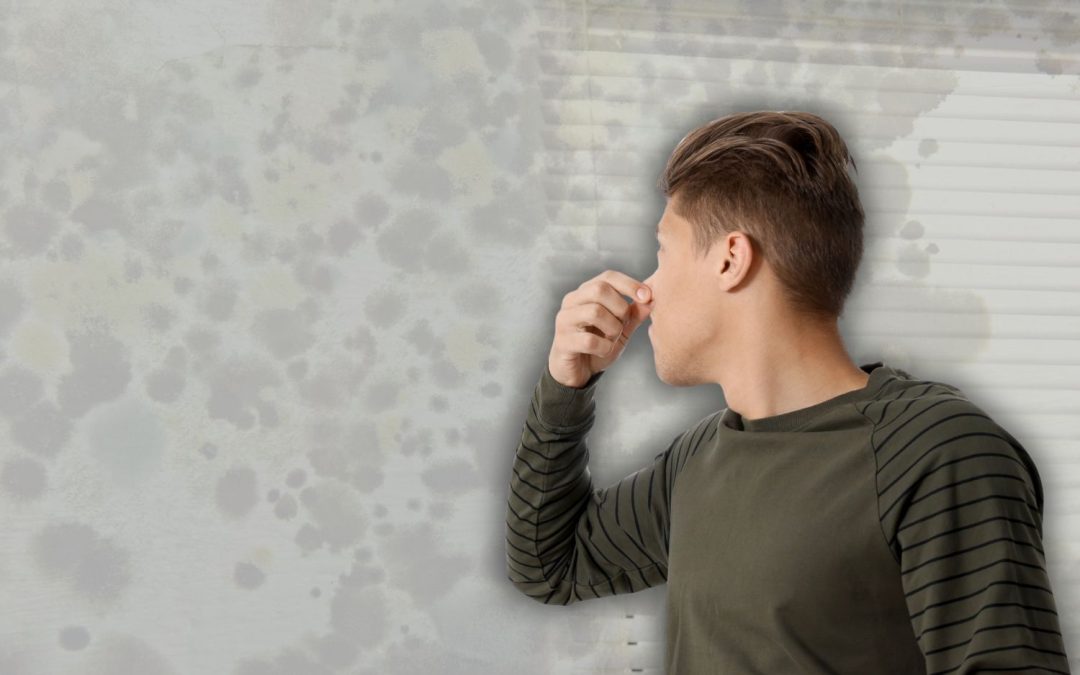
Mold usually smells musty, earthy, and damp, often described as wet socks, rotting wood, or old books left in a basement. If that stale odor keeps drifting through a room in your Central Florida home, your nose is doing its job: it is warning you that moisture, and probably mold, is hiding nearby.
At Elite Mold Services, our certified inspectors chase down that smell every day. This guide covers what mold smells like, why black mold smells different, where the odor tends to hide, how to tell mold from mildew, and what the smell could mean for your health.
What Does Mold Smell Like?
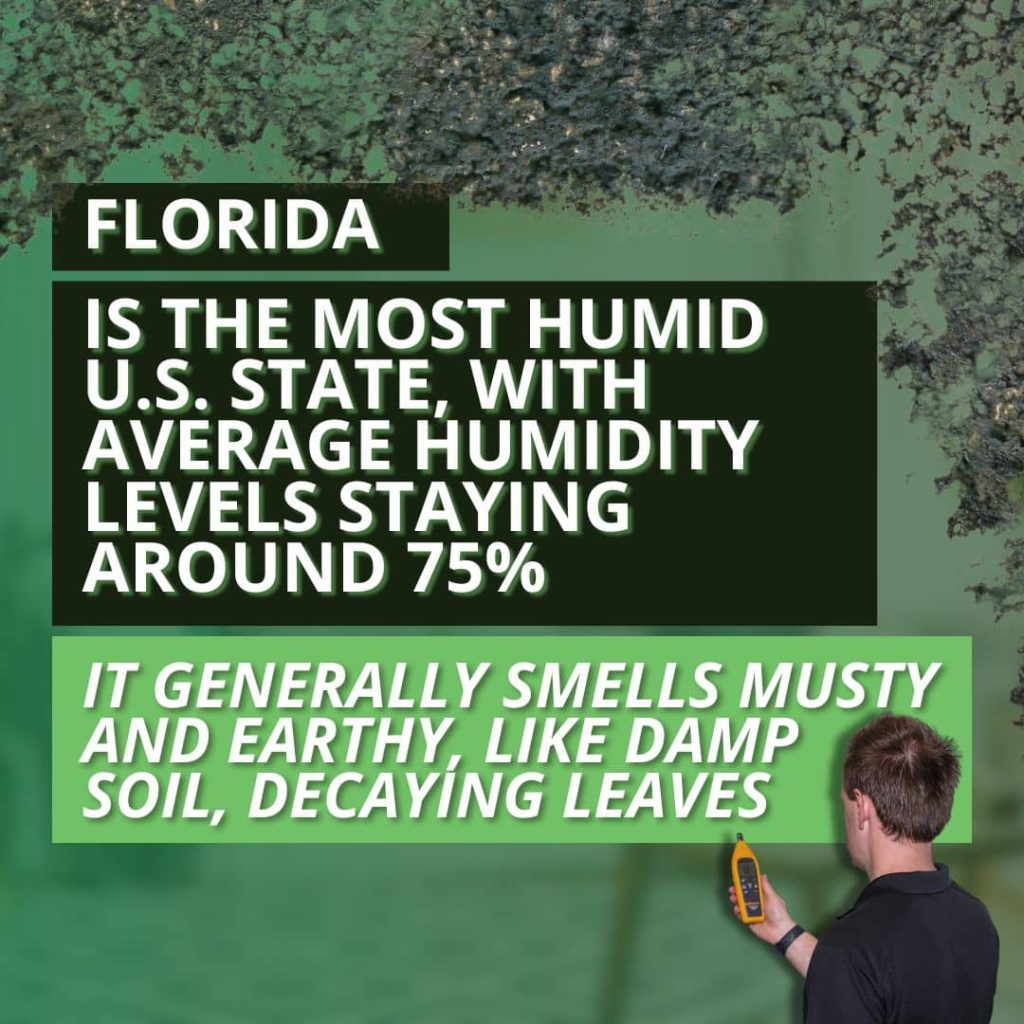
Mold smells musty and earthy, like damp soil, decaying leaves, or a basement that never quite dries out. Most people notice it as a stale, “old” smell that gets stronger in closed-up rooms, closets, or near a water leak. The odor does not come from the mold itself so much as from the gases it gives off while it grows.
You can read the EPA’s plain-language take on the odor in their own guide to what mold smells like, which lines up with what our inspectors find in the field.
Why Mold Produces an Odor (mVOCs)
As mold grows, it releases microbial volatile organic compounds, or mVOCs. These are gases that evaporate quickly at room temperature, and they are the actual source of that musty smell.
The bigger the mold colony, the more mVOCs it produces, so a strong odor often points to a larger or more active problem than what you can see.
Common Mold Smells by Type
Different mold species give off slightly different odors. Here is how some of the molds our inspectors find on and inside Central Florida walls tend to smell:
| Mold type | What it smells like |
|---|---|
| Aspergillus | Musty and earthy, like damp soil |
| Penicillium | Musty and earthy with a faint cigar-like note |
| Aureobasidium | Plain musty |
| Acremonium | Sharp and pungent |
| Stachybotrys chartarum (“black mold”) | Meaty, pungent, like decaying hay or rotting foliage |
You do not need to identify the species by nose. The bottom line: a persistent musty, earthy, or “wet” smell almost always traces back to moisture and mold somewhere close by.
What Does Black Mold Smell Like?
Black mold tends to smell stronger and more unpleasant than common household mold, often described as musty mixed with a meaty, rotting, or sour edge. That heavier odor comes from Stachybotrys chartarum, the species many people call “toxic black mold,” which usually grows where there has been long-term water damage.
A common question we get is whether mold can smell like urine. A sharp, ammonia-like or sour smell can sometimes come from heavy mold growth or from the materials it is breaking down, but a true urine smell can also point to pests or plumbing issues.
Either way, a strong, sour, musty odor is worth investigating rather than masking with an air freshener.
Where Is the Mold Smell Coming From in Your Home?
If you can smell mold but cannot see it, the source is usually hidden where moisture collects out of sight. The smell tends to be strongest closest to the source, so let your nose lead you. Common hiding spots include:
- Inside walls, especially after a slow plumbing or roof leak. Mold can even grow on concrete and in the gap behind wallpaper.
- HVAC systems and air vents, which spread the odor throughout the whole house when the AC runs.
- Carpet and padding, particularly after flooding or a damp slab.
- Bathrooms, under sinks, and around showers.
- Crawl spaces and attics, where humid Florida air and poor ventilation meet.
Hidden mold behind walls is exactly where a do-it-yourself search hits a wall. Our team uses tools like thermal imaging inspections and behind-the-wall (cavity) air sampling to find moisture and mold without tearing your home apart.
Other signs to watch for alongside the smell include staining or discoloration, paint that bubbles or peels, walls that feel damp, a hollow sound when you tap, and sniffles or headaches that ease when you leave the room.
Mold Smell vs. Mildew Smell: How to Tell the Difference
Mold and mildew both smell musty, but mildew usually smells lighter and “flatter,” while mold tends to smell heavier, danker, and more rotten. Mildew is really a surface form of mold. It shows up as a flat, powdery, gray or white film on damp surfaces, and it wipes away fairly easily. Mold often grows thicker, fuzzier, and deeper into the material, which is why its odor is stronger and harder to get rid of.
If you are trying to sort out which one you are dealing with, our breakdown of whether mildew is the same as mold walks through the differences in plain language. The smell test is a useful first clue, but it is not a diagnosis, which is why testing matters when the odor lingers.
What Smelling Mold Can Mean for Your Health
Breathing mold-tainted air can irritate your body, especially with long exposure or for anyone with allergies or asthma. As the EPA notes in its overview of indoor air quality, poor IAQ is linked to symptoms like:
- Eye, nose, and throat irritation
- Coughing, congestion, or wheezing
- Headaches, fatigue, and dizziness
- Worsened asthma and allergy symptoms
Children can be especially sensitive, and their symptoms are easy to mistake for a lingering cold. If you have little ones at home, our guide to mold symptoms in kids is worth a read. Controlling indoor moisture is the best long-term defense, so it is also worth understanding whether a dehumidifier really helps with mold before you rely on one.

Related Questions to Explore
Does a musty smell always mean mold?
Not always, but it is the most common cause. A musty smell can also come from a damp basement, a clogged HVAC drain, old water damage, or standing water under the house. Homeowners in colder, basement-heavy regions run into this constantly, and this guide on clearing a musty smell in a basement covers sources that are not always mold. When the smell sticks around after you clean and ventilate, mold is the likely culprit.
Can you always smell mold, or can it hide?
You cannot always smell it. Small or dormant colonies may give off little odor, and some people are simply less sensitive to mVOCs than others. Mold sealed inside a wall or under flooring can also stay quiet until it spreads. That is why a clean nose does not guarantee a clean home, and why mold testing is sometimes necessary even without an obvious smell.
Does mold ever smell sweet?
Some molds give off a faint sweet or alcohol-like note layered under the usual musty smell. It still signals active mold growth, so a sweet-musty odor is not a reason to relax. Treat it the same way you would any persistent musty smell and track down the moisture behind it.
What does mold smell like in walls?
Mold inside the walls smells musty and earthy, and the odor grows stronger the closer you get to the wall. You may also notice the smell concentrated in one room, damp-feeling drywall, or staining bleeding through paint or wallpaper. Because the growth is hidden, confirming it usually takes professional moisture detection.
What should you do right after you smell mold?
Find where the smell is strongest, look for nearby moisture or leaks, and avoid disturbing any visible growth, which can release more spores. Then schedule an inspection to confirm whether it is mold, how far it has spread, and what type it is. Guessing, or painting over it, only buys time for the problem to grow.
When to Call a Professional
Call a professional when the musty smell will not go away, keeps coming back, or shows up with damp walls, stains, or family members feeling unwell. A visual check is never enough to identify a mold species or confirm whether it produces mycotoxins, even for an experienced inspector. That takes lab testing.
Elite Mold Services has served Central Florida from our Orlando and Winter Garden offices since 2006, with more than 60 years of combined experience and ACAC, NORMI, and IAC2 certifications. We start with a thorough mold inspection, then recommend mold testing when the findings call for it, with lab results back in as little as 24 hours.
One important note: as a licensed mold assessment company, we do not perform remediation. Florida law (Fla. Stat. § 468.8419) bars a mold assessor from also remediating the same property within 12 months, which keeps our findings independent and honest. If remediation is needed, we will point you to trusted contractors for cleanup estimates.
Conclusion
That musty smell is your early warning system. A few things to remember:
- Mold smells musty, earthy, and damp; black mold smells heavier and more rotten.
- A lingering or recurring odor usually means hidden moisture, often inside walls, HVAC, or crawl spaces.
- The smell test is a clue, not a diagnosis. Testing confirms what it is and how far it has spread.
If a musty smell has you wondering what is hiding in your walls, schedule a mold inspection with Elite Mold Services or contact our team. We will help you find the source and breathe easier.