


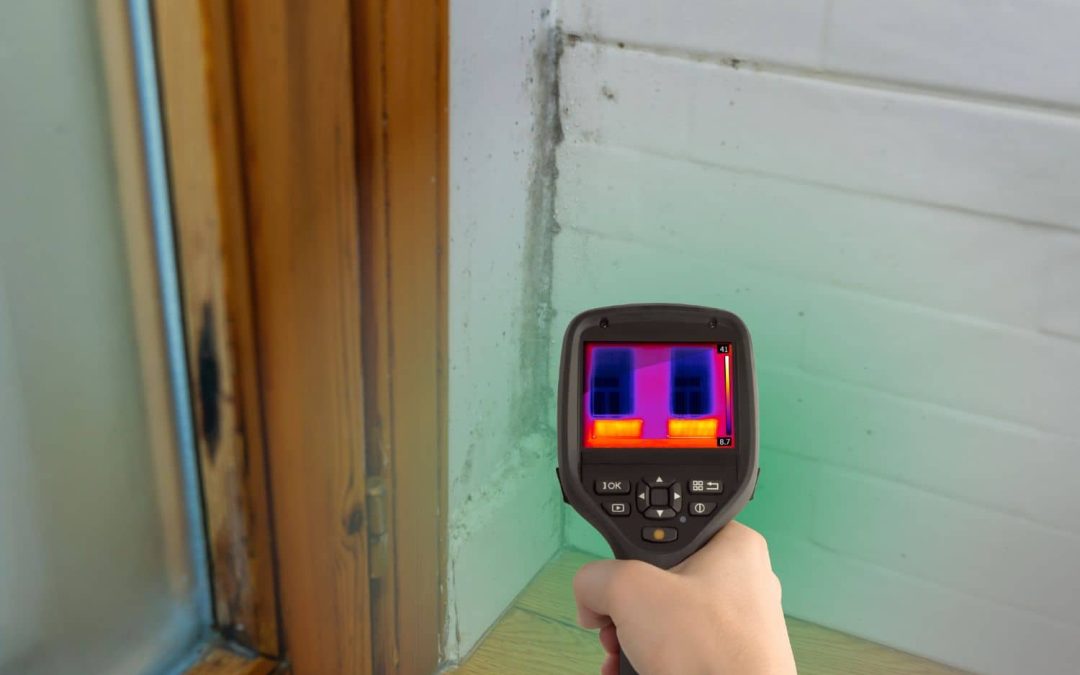
Thermal imaging mold detection allows our team at Elite Mold Services to identify hidden moisture by using infrared cameras to map heat signatures. Detecting mold in a Florida home often feels like a guessing game. Most people look for dark spots on the ceiling or follow a musty smell in the laundry room.
However, the most dangerous mold growth usually hides where you cannot see it. It lives behind your drywall, under your floorboards, and inside your attic insulation. This non-invasive method helps protect your property from unnecessary damage while ensuring your family stays safe.
In the past, finding this hidden growth required cutting holes in the walls just to see what was happening inside. Fortunately, technology has changed how we protect our homes.
In the humid environment of Central Florida, where moisture can accumulate rapidly from daily storms, having a precise tool like a thermal camera is the difference between a quick fix and a massive renovation project.
The Science of Infrared Heat Vision
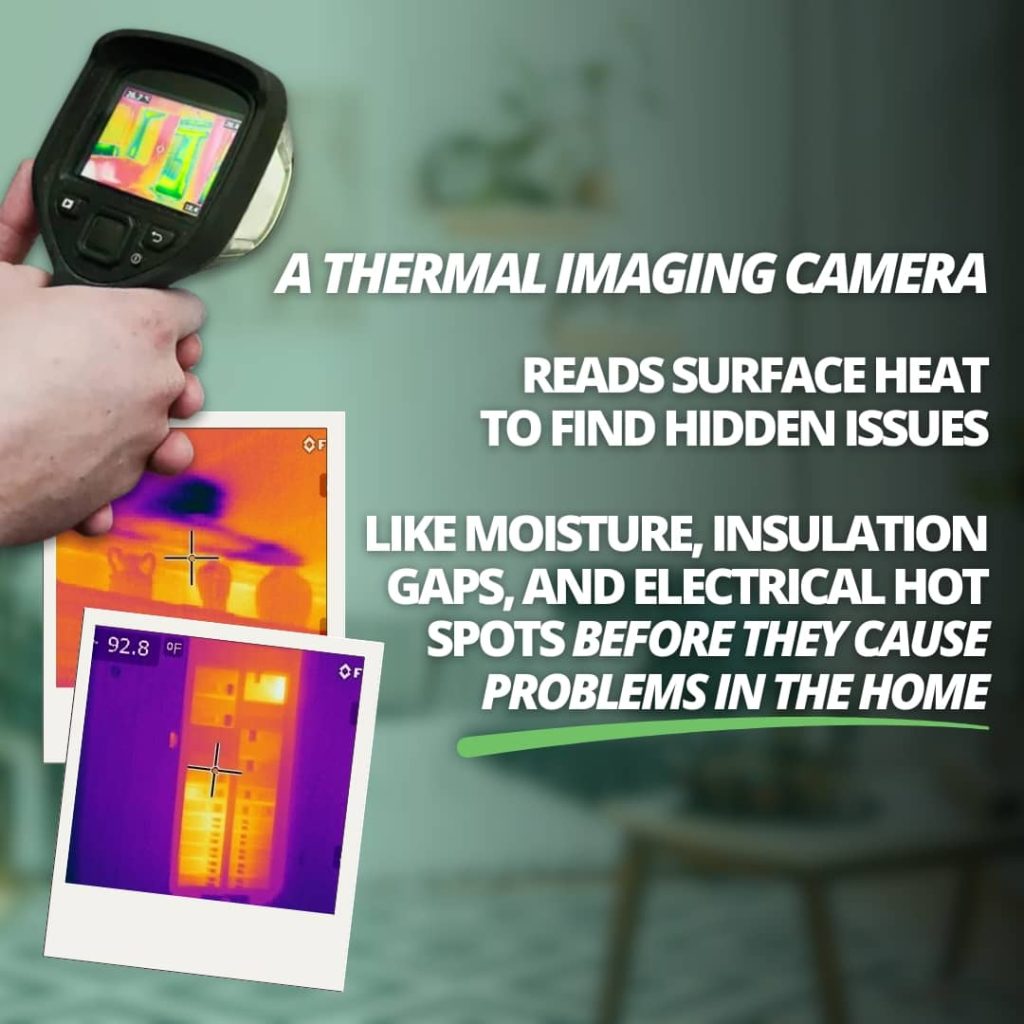
A thermal camera does not see mold spores through a wall. Instead, it detects infrared radiation, which is a type of energy that every object emits.
The camera converts this energy into a visual map of colors on a screen.
When we scan a room, we are looking for moisture patterns. Water has a high thermal mass. This means it holds onto heat or cold longer than materials like drywall or wood. As moisture evaporates from a damp surface, it creates a process called evaporative cooling.
On our camera screen, these wet areas usually appear as dark blue or purple spots. These stand out clearly against the warmer reds and yellows of dry building materials.
Why Central Florida Homes Need Thermal Scans
In our local climate, moisture is a constant threat that moves quickly. Our high humidity and frequent afternoon thunderstorms create unique challenges for homeowners in cities like Orlando and Winter Park.
The Humidity Factor
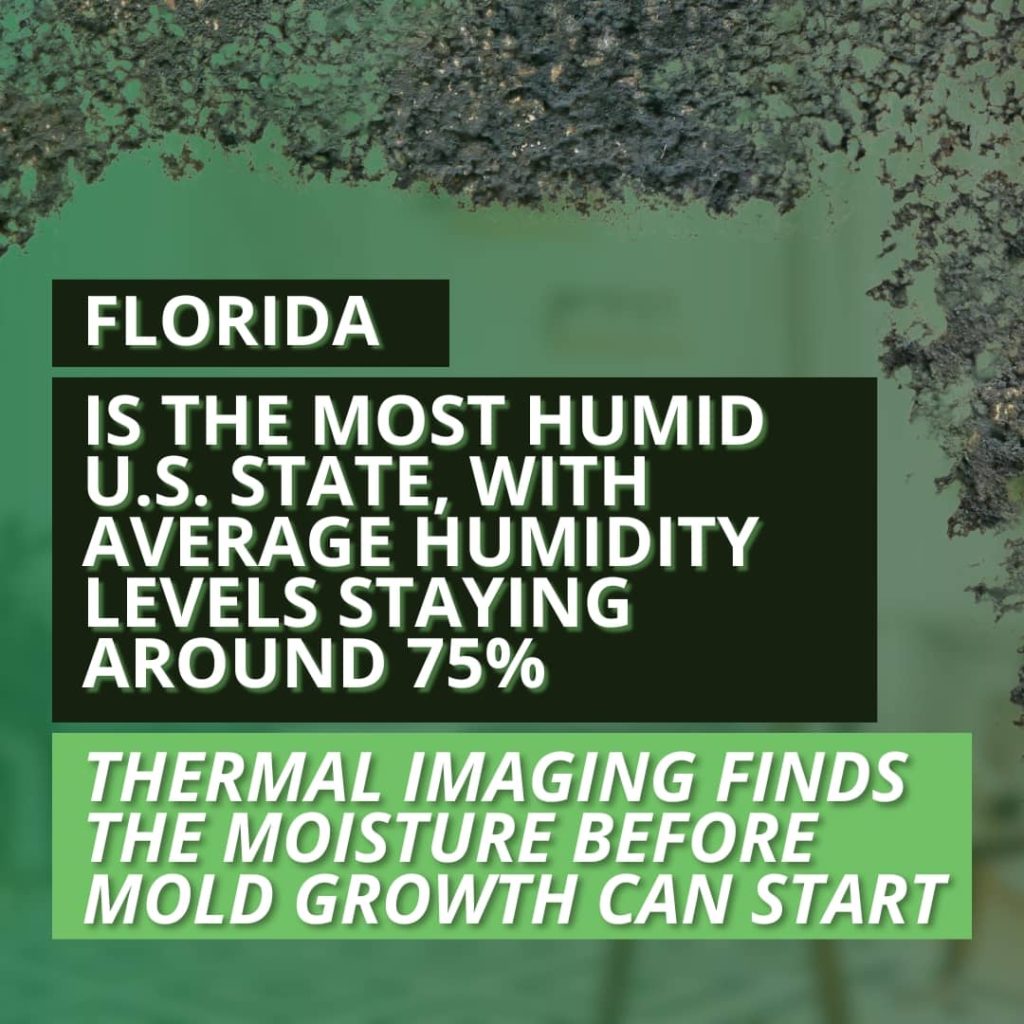
Central Florida humidity often stays around 70-75 percent. This high moisture level in the air can cause condensation on cool surfaces, like AC vents or windows.
Over time, this condensation seeps into the walls. A thermal camera can find these damp spots long before they grow enough mold to be seen by the naked eye.
Storm and Roof Damage
After a typical Florida storm, water can soak into attic insulation without dripping through the ceiling right away. A thermal scan can detect this wet insulation from the room below.
Because wet insulation is much denser and cooler than dry insulation, it shows up as a dark shadow on our cameras. This allows us to catch roof leaks before the wooden trusses of your home begin to rot.
Slab and Foundation Issues
Many homes in our area are built on concrete slabs. During the rainy season, the ground becomes saturated. If there is a crack in the slab or a failure in the vapor barrier, moisture can wick up into the baseboards and drywall.
Thermal imaging allows us to see this moisture climbing up your walls before the paint starts to bubble or peel.
Comparing Inspection Methods
Before infrared technology became common, inspections were much more invasive. If an inspector suspected a leak, they might have to remove baseboards or drill holes.
While those methods are still useful in some cases, thermal imaging is the preferred first step for modern homeowners.
| Feature | Traditional Inspection | Thermal Imaging Scan |
| Physical Damage | Often requires cutting drywall | Zero damage to the home |
| Speed | Can take hours to search | Scans entire rooms in minutes |
| Visibility | Misses moisture inside the walls | Identifies moisture through surfaces |
| Accuracy | Relies on human eyesight | Relies on scientific heat data |
| Cost Value | Risk of extra repair costs | Targeted and efficient |
The Professional Approach for Accurate Results
A thermal imaging camera is a powerful tool for mold detection, but it requires a trained expert to understand the data. You might see small thermal cameras that plug into a phone, but these often lack the sensitivity needed for real mold detection. A novice might see a “cold spot” and assume it is mold when it is actually just a lack of insulation or an air vent blowing on the wall.
At Elite Mold Services, we follow professional standards for every assessment. We never rely on a thermal image alone. Once we find a suspicious heat signature, we follow up with a moisture meter.
This device provides a physical reading of the water content in a material. If the thermal camera shows a purple spot and the moisture meter shows a high moisture level, we have confirmed a problem.
Common Hidden Mold Hotspots
During our years of serving Central Florida, we have identified several common areas where mold loves to hide. We pay special attention to these zones during our infrared scans.
- Kitchen and Bathroom Cabinets: Slow leaks from a dishwasher or a sink drain often stay hidden behind the cabinetry. We can look through the bottom of the cabinets to see if the subfloor is damp.
- Appliance Water Lines: Refrigerators with ice makers and washing machines are frequent sources of slow leaks. A pinhole leak in a plastic water line can drip for months without being noticed.
- Shower Pans and Tiling: If the waterproof membrane under your shower floor fails, water will slowly seep into the surrounding walls. We use thermal cameras to scan the walls adjacent to every shower in the home.
- HVAC Air Handlers: Because these units are cold, they are prone to sweating. If the drain pan clogs, water can overflow into the wall cavity or the flooring.
The Limitations of Infrared Technology
While thermal imaging is an incredible tool for mold detection, it is not magic. Homeowners need to understand what the camera cannot do.
- It cannot see through glass: Infrared radiation reflects off mirrors and windows. An inspector must be careful to avoid their own “heat reflection.”
- It does not detect dry mold: If a leak happened months ago and the area has since dried out, the mold may still be there, but the camera will not see it. This is why we also use air quality testing.
- It detects surface temperatures: The camera shows the temperature of the surface it is pointed at. If a leak is buried very deep within a massive structural beam, it might take longer to show up on the surface.
- Temperature differences matter: To get the best results, there needs to be a temperature difference between the inside and outside of the house. We often ask homeowners to keep their AC running before we arrive to help create this contrast.
Related Questions to Explore
Can thermal imaging detect mold that is already dry? No. Thermal imaging only detects the temperature differences caused by active moisture. If a leak has stopped and the area is dry, the mold will remain, but the camera will not pick it up. In these situations, we use surface swabs or air quality testing to find the spores.
Is a thermal scan part of every mold inspection? While some companies charge extra for this technology, we believe it is an essential part of a thorough assessment. You should always ask your inspector if they use infrared tools and if they are certified to interpret the data.
Will the camera show a leak inside a concrete slab? Yes, if the leak is active. Because the water is a different temperature from the concrete, it will create a distinct pattern on the surface of the floor that the camera can see.
Can I just use a thermal camera myself? While you can buy basic thermal tools, interpreting the data requires experience. Many materials have different emissivity levels. This means they radiate heat differently even if they are the same temperature. A professional knows how to adjust for these factors.
When to Call a Professional
You should not wait until you see visible mold to act. Early detection is the most effective way to keep remediation costs low. If you have any reason to suspect a moisture problem, a professional assessment is the best way to get answers.
You should contact Elite Mold Services for a thermal imaging scan if:
- You notice a musty or earthy smell that you cannot locate.
- You have recently experienced a plumbing overflow or a roof leak.
- You are buying a new home and want a deeper look than a standard inspection provides.
- A family member is suffering from unexplained allergies or respiratory issues indoors.
- You have noticed a sudden, unexplained increase in your water bill.
Our team provides comprehensive reports that document our findings with both standard and infrared photography. We serve homeowners throughout the Orlando area, providing the local expertise needed to handle our unique climate.
Conclusion
Thermal imaging is a game-changer for Florida home mold detection. By identifying hidden moisture before it causes major structural damage or health issues, this technology provides a level of security that a visual check simply cannot match. If you are concerned about the air quality in your home or suspect a hidden leak, do not rely on guesswork.
At Elite Mold Services, we combine advanced infrared tools with years of professional experience to give you a clear look at what is happening inside your walls.