


If you’ve been researching mold testing options, you’ve probably come across the term ERMI. It sounds technical, and it is. But understanding what ERMI testing measures and when it makes sense can help you make informed decisions about your home’s indoor air quality.
ERMI stands for Environmental Relative Moldiness Index. It’s a DNA-based testing method developed by the EPA that provides a detailed picture of mold presence in your home.
For Florida homeowners dealing with humidity, water intrusion, or unexplained health symptoms, ERMI testing offers insights that standard mold inspections may miss.
You can find a sample ERMI report at the bottom of this post!
What Exactly Is ERMI Mold Testing?
ERMI testing analyzes dust samples from your home to identify mold species at the DNA level. Unlike traditional air sampling that captures what’s floating in the air at a single moment, ERMI examines settled dust that has accumulated over time. This gives a broader picture of mold activity in your living environment.
The test screens for 36 different mold species, divided into two groups:
- Group 1: 26 species associated with water-damaged buildings
- Group 2: 10 common species found in most environments, regardless of water damage
Your ERMI score is calculated by comparing the levels of water-damage molds (Group 1) against common molds (Group 2). The resulting number, which typically ranges from -10 to 20, indicates your home’s relative moldiness compared to a national reference database.
| ERMI Score | What It Indicates |
| Below -4 | Low relative moldiness |
| -4 to 0 | Moderate relative moldiness |
| 0 to 5 | Above average moldiness |
| Above 5 | High relative moldiness |
A higher score suggests elevated levels of mold species commonly found in water-damaged buildings. A lower score indicates your home has mold levels comparable to or better than those of typical homes without water damage.
How Does ERMI Differ From Standard Mold Testing?
Traditional mold testing methods include air sampling and surface swabs. These approaches also have value, but they work differently from ERMI.
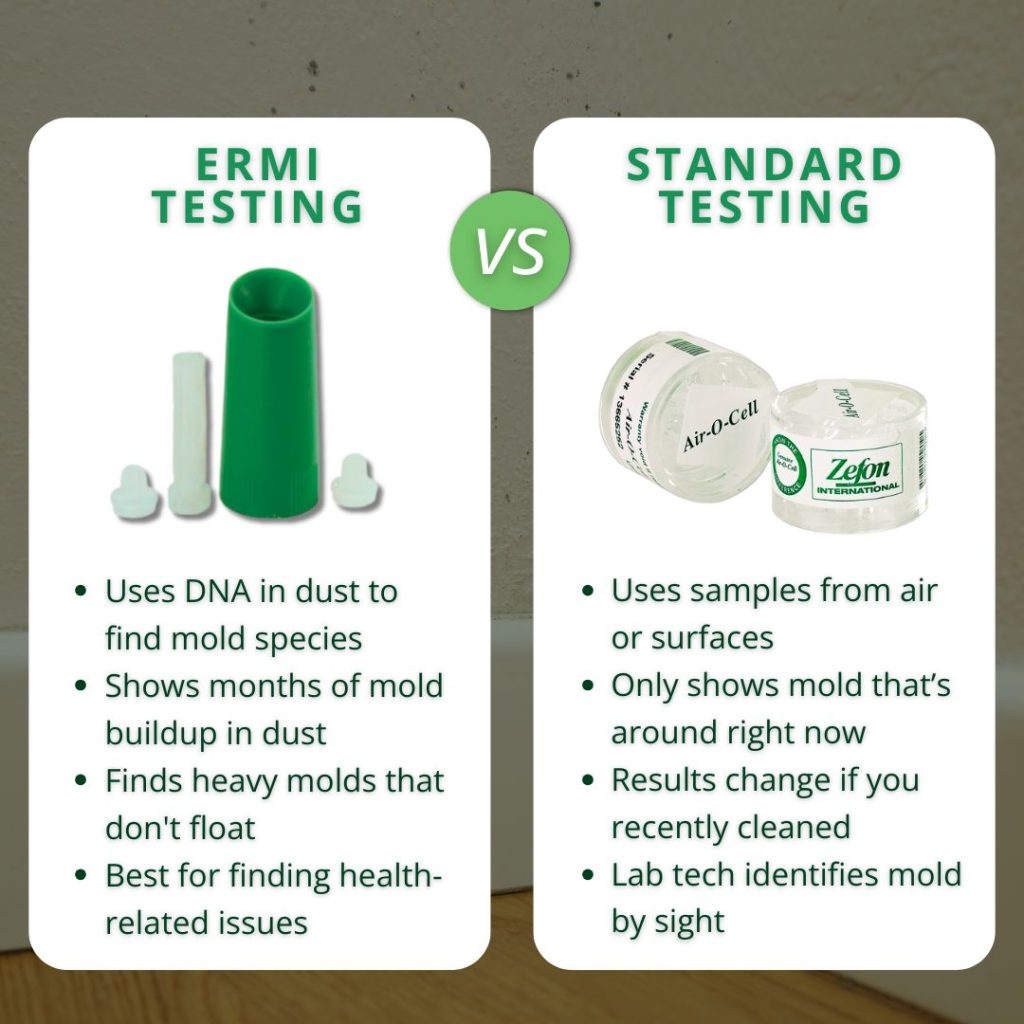
- Air sampling captures airborne spores during a brief collection period, usually a few minutes. Results reflect mold activity at that specific moment. If mold isn’t actively releasing spores during sampling, air tests may underestimate the problem. Factors like HVAC operation, humidity, and recent cleaning can all affect results.
- Surface sampling identifies mold on specific materials but doesn’t tell you much about overall indoor air quality or mold presence in areas you didn’t sample.
- ERMI testing analyzes dust that has settled over weeks or months, providing a cumulative snapshot rather than a momentary one. It identifies specific species through DNA analysis rather than relying on visual identification under a microscope. This precision helps distinguish between problematic mold types and ordinary environmental mold.
For Central Florida homes where humidity fluctuates and water intrusion events are common, ERMI’s longer-term perspective often provides more useful information.
When Does ERMI Testing Make Sense?
ERMI testing isn’t necessary for every situation. It’s a specialized tool best suited for specific circumstances.
Consider ERMI testing if:
- You’ve had water damage and want to verify remediation was successful
- You’re experiencing unexplained health symptoms that may be mold-related
- Standard air sampling came back normal, but you still suspect mold issues
- You’re purchasing a home with a history of water intrusion or flooding
- You need documentation for medical or legal purposes
- You want a baseline assessment of a new home
ERMI is particularly valuable when health concerns are involved. Some physicians who specialize in mold-related illness specifically request ERMI testing because it identifies species associated with health effects and provides quantifiable data for treatment decisions.
How ERMI Testing Works
The testing process is straightforward, though proper sample collection matters for accurate results.
- Dust collection. Samples are collected from areas where dust accumulates, typically carpets, upholstered furniture, or HVAC filters. A special vacuum cassette or cloth is used to gather dust following specific protocols.
- Laboratory analysis. Samples are sent to an accredited laboratory that uses a method called MSQPCR (Mold Specific Quantitative Polymerase Chain Reaction). This DNA-based analysis identifies and quantifies the 36 target mold species.
- Results and scoring. The lab calculates your ERMI score based on the species detected and their concentrations. You’ll receive a detailed report listing each species found, along with your overall score.
Results typically take five to seven business days. A qualified mold professional can help you interpret the findings and recommend next steps if elevated levels are detected.
Understanding Your ERMI Results
An ERMI score is just one piece of the puzzle. Context matters when interpreting results.
- Location matters. ERMI scores were developed using a national database. Florida homes naturally have higher baseline mold exposure due to our climate. A score that looks elevated compared to homes in Arizona may be more typical for Central Florida.
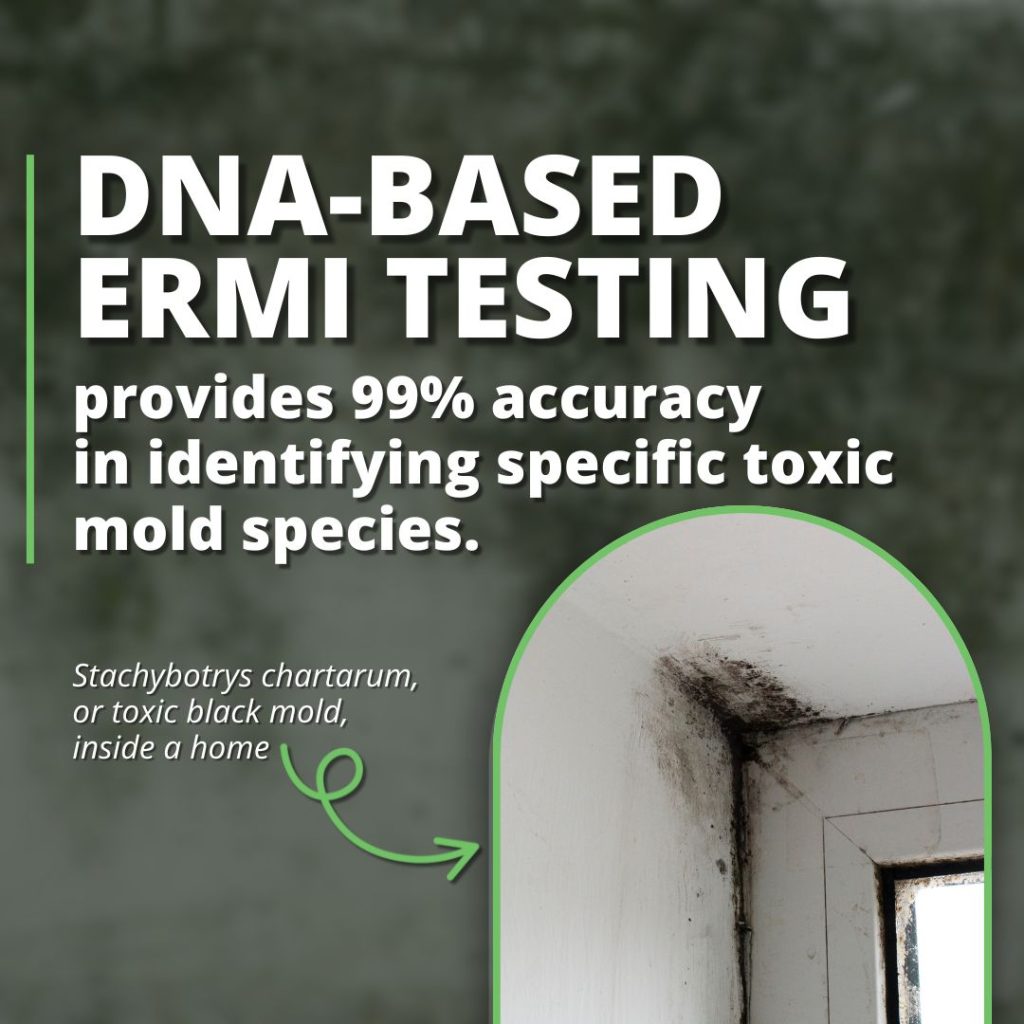
- Species identification matters. The detailed species breakdown in your report often provides more actionable information than the overall score. Certain molds like Stachybotrys (black mold) or Chaetomium warrant attention even at relatively low levels, while others are less concerning.
- Your health matters. If you’re experiencing symptoms and your ERMI shows elevated water-damage molds, that correlation is significant. For individuals with mold sensitivity, even moderate scores may indicate a problem worth addressing.
A qualified mold inspector can help you understand what your results mean for your specific home and health situation. At Elite Mold Services, we walk clients through their reports and explain what the numbers actually mean for their circumstances.
ERMI Testing vs. EMMA Testing
You may also encounter EMMA testing as a mold assessment option. While both are DNA-based, they serve different purposes.
- ERMI measures mold spore DNA in dust samples to assess the overall moldiness of an environment. It tells you what mold species are present and in what quantities.
- EMMA (Environmental Mold and Mycotoxin Assessment) tests for mycotoxins, the toxic compounds that certain molds produce. Mycotoxins can persist in environments even after mold has been remediated and are often relevant when health symptoms are the primary concern.
Some situations call for ERMI, some for EMMA, and some for both. If you’re testing primarily to assess mold presence and identify species, ERMI is typically the right choice.
If health symptoms are the driving concern and you want to know whether toxic compounds are present, EMMA testing may provide additional valuable information.
Other Related Questions for Florida Homeowners
What causes mold growth in Florida homes?
Florida’s combination of heat, humidity, and afternoon thunderstorms creates ideal conditions for mold. Roof leaks, plumbing issues, AC condensation, and poor ventilation are common contributors. Even homes without obvious water damage can develop mold problems due to sustained high humidity.
How can I reduce mold risk in my home?
Controlling moisture is key. Keep indoor humidity below 60%, ideally between 30% and 50%. Fix leaks promptly, ensure proper bathroom and kitchen ventilation, and have your HVAC system serviced regularly. Dehumidifiers help in particularly humid areas of the home.
What’s the difference between mold inspection and mold testing?
A mold inspection is a visual assessment of your home, looking for signs of mold growth, water damage, and moisture issues. Mold testing involves collecting samples for laboratory analysis to identify species and concentrations. Both provide valuable information, and testing is often performed as part of a comprehensive inspection.
Should I test for mold before buying a home in Florida?
If there’s any history of water damage, flooding, or visible signs of moisture issues, testing before purchase is wise. Even without visible concerns, many Florida buyers request mold assessments given our climate. Testing provides peace of mind and negotiating power if issues are discovered.
When to Call a Professional
Consider professional mold testing if you notice:
- Musty odors that persist despite cleaning
- Visible mold growth on walls, ceilings, or other surfaces
- Water stains or discoloration indicating past leaks
- Respiratory symptoms, headaches, or fatigue that improve when you leave home
- Recent flooding or water damage, even if it seemed minor
- High humidity that you can’t seem to control
For buyers, scheduling mold testing during your inspection period provides answers before you commit to a purchase. For homeowners, testing gives you data to make informed decisions about remediation and air quality improvements.
Conclusion
ERMI mold testing offers Central Florida homeowners a detailed, DNA-based assessment of mold presence that goes beyond what standard air sampling provides. For situations involving health concerns, post-remediation verification, or pre-purchase due diligence, ERMI delivers actionable information about what’s actually in your home.
Elite Mold Services provides comprehensive mold inspections, ERMI testing, EMMA mycotoxin testing, and indoor air quality assessments throughout Central Florida.
Have questions about mold testing for your home? Contact us today to discuss which test or inspection makes sense for your situation.