


If you have been dealing with sneezing, itchy eyes, congestion, or skin reactions that seem worse at home, the instinct is usually to look outward. Pollen counts. Seasonal changes. Something is going around. But for a lot of Central Florida households, the answer is hiding inside the house itself.
A home allergen test identifies what is actually present in your indoor environment and at what levels. It is one of the clearest ways to stop guessing and start understanding what your household is breathing every day.
What Is a Home Allergen Test?
A home allergen test is an environmental assessment that measures the concentration of specific biological allergens inside a property. It identifies triggers that are invisible to the naked eye and produce no obvious odor. A visual inspection alone cannot find them.
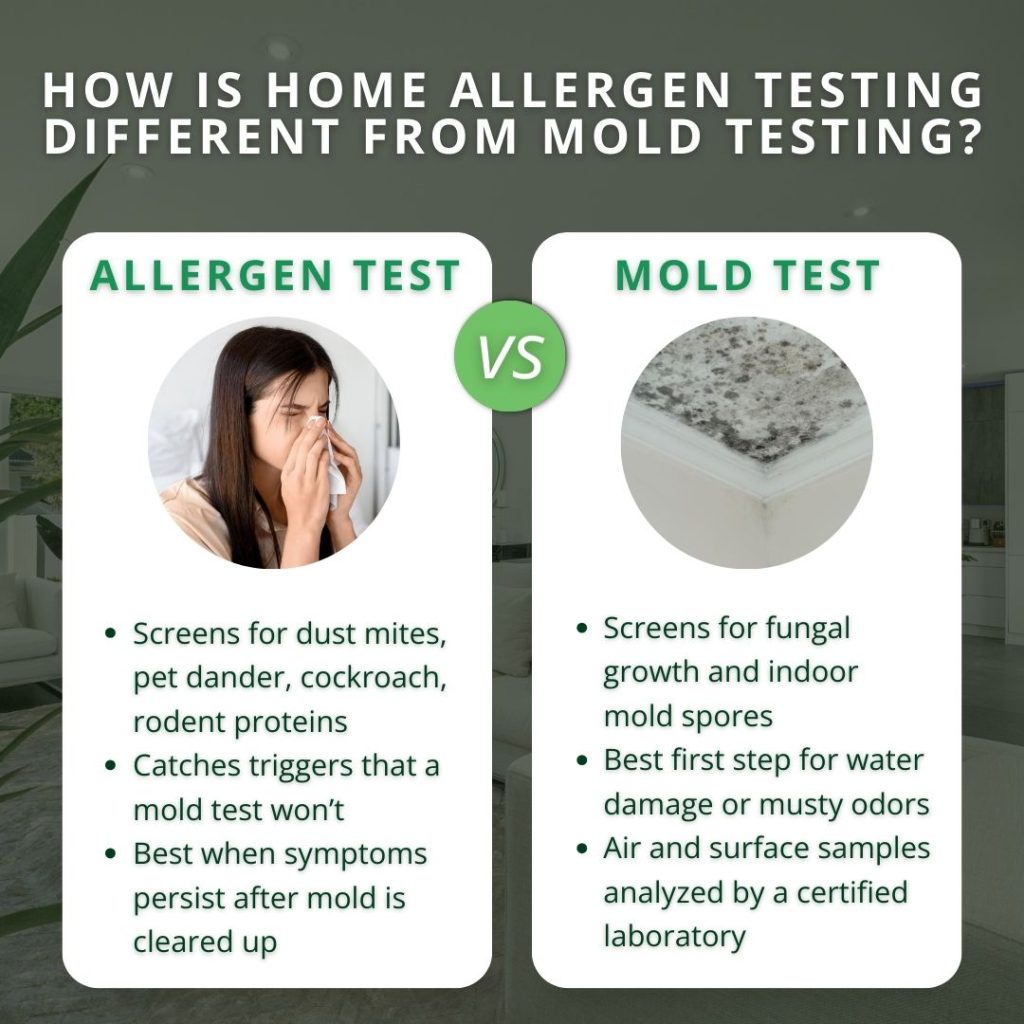
Unlike a mold inspection, which focuses on fungal growth and moisture conditions, a home allergen test screens for a broader set of biological triggers. The two are complementary. Allergen testing is most commonly recommended when a mold inspection comes back at normal levels, but occupants are still experiencing symptoms that point to something in the indoor environment.
A certified third-party laboratory analyzes all results and reports not just what is present, but at what concentration. That detail is what allows for a meaningful health risk evaluation.
What Does a Home Allergen Test Screen For?
Elite Mold Services’ allergen testing detects unusual levels of the following:
- Dust mites: The most prevalent indoor allergen in Florida homes, thriving in mattresses, upholstery, and carpet in the warm, humid conditions that are simply the default here
- Cat and dog dander: Shed proteins from pets remain airborne and embedded in surfaces for months, even after a pet is no longer in the home
- Cockroach allergens: A year-round concern in Florida, cockroach proteins are a known asthma and respiratory trigger, especially in children
- Mouse and rat allergens: Rodent urine proteins are potent and persistent, often remaining at elevated levels long after an infestation is treated
- Latex: Latex allergens accumulate in household dust and can affect sensitive individuals without an obvious source
Why Central Florida Homes Carry a Higher Allergen Risk
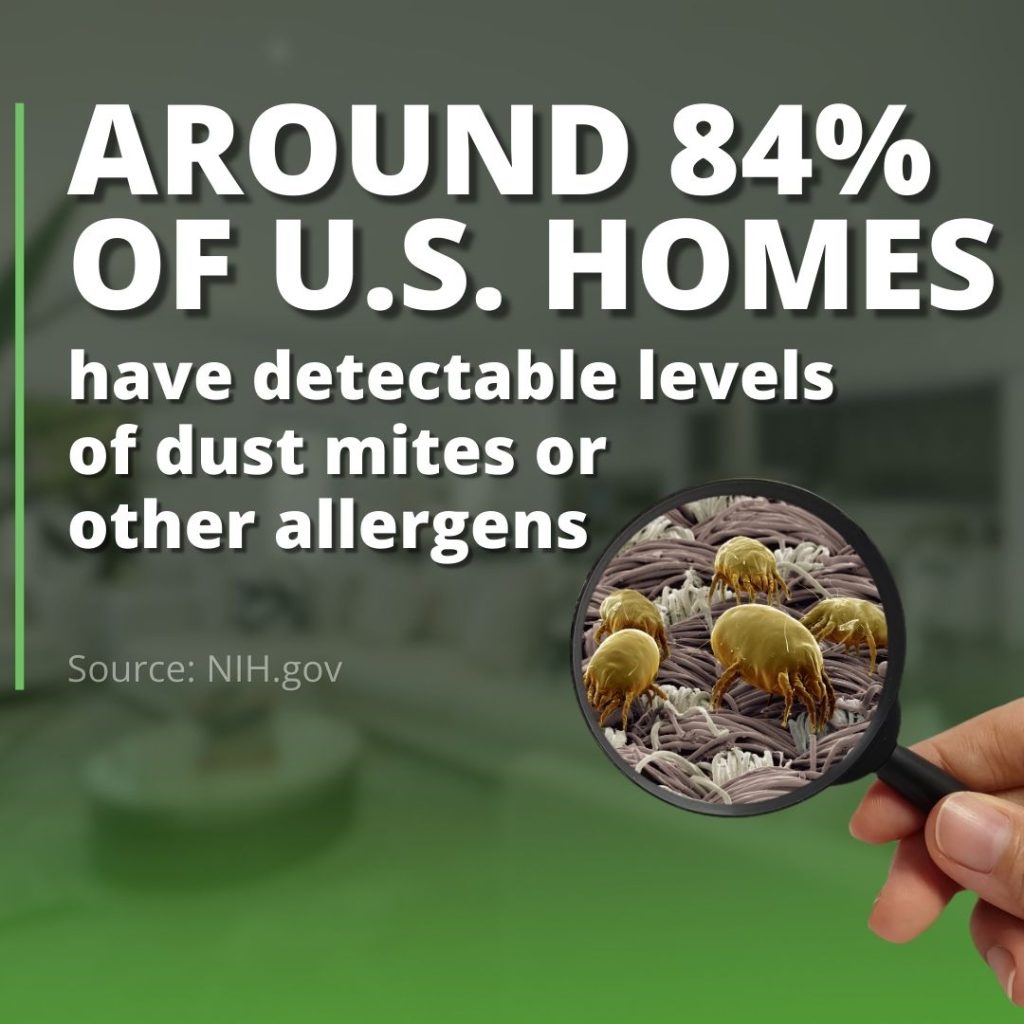
Florida’s climate creates near-ideal conditions for allergen accumulation. Dust mites thrive when indoor relative humidity climbs above 50 percent. That threshold is easy to reach in Central Florida homes, even those with functioning AC systems. Pockets of elevated humidity in bedrooms, closets, and poorly ventilated spaces allow dust mites to accumulate quietly over time.
Cockroach populations stay active year-round in Florida rather than dying back in winter. Their allergen proteins survive long after pest treatment, which is part of why symptoms sometimes persist even when an infestation appears resolved.
Pet dander circulates through HVAC systems and settles deep into carpet and upholstery fibers. Standard cleaning does not fully remove it. Homes that previously housed pets can still carry elevated dander levels months after the animal is gone, sometimes long enough to affect the next family that moves in.
None of these allergens are visible or odorous at the concentrations that affect health. Testing is the only reliable way to know what you are actually dealing with.
A pattern worth noting: If symptoms improve noticeably when you leave the house for a few days, or get worse in specific rooms, that points to the indoor environment as the source rather than outdoor seasonal triggers.
What Allergen Test Results Actually Tell You
Lab results report concentration levels for each allergen, compared against established thresholds. That comparison determines whether levels fall within a normal range or sit high enough to affect health.
This does three things for households dealing with persistent symptoms:
- Identifies the actual source: Many residents have changed cleaning products, removed rugs, or tried allergy medication without improvement because they treated the wrong trigger. A test points to the specific allergen driving the problem
- Establishes a baseline: After taking steps to reduce allergen levels, a follow-up test confirms what worked and which areas of the home still need attention
- Supports medical conversations: Documented results give your doctor or allergist concrete data, which is especially useful when asthma, recurring respiratory infections, or treatment-resistant allergy symptoms are involved
When Allergen Testing Is Part of a Broader Indoor Assessment
Allergen testing does not exist in isolation. It is one service within a larger picture of indoor environmental health, and understanding how the pieces connect helps homeowners make smarter decisions about what to test for and when.
Start With a Mold Inspection
Mold is typically the first thing to evaluate when indoor symptoms are present. Florida’s humidity and history of water intrusion in many homes create near-constant conditions for fungal growth.
A professional mold inspection uses moisture meters, thermal imaging, and air sampling to find active or hidden mold growth that a visual check would miss. When mold turns up, the path forward involves testing, possible remediation, and post-remediation verification to confirm the cleanup was effective.
When Mold Is Not the Answer
If mold testing comes back at normal levels but symptoms continue, allergen testing is the logical next step.
It screens for the biological triggers that mold testing does not cover: dust mites, pet dander, cockroach and rodent proteins, and latex.
Go Deeper With Additional Environmental Services
For households with multiple unexplained symptoms or where a more comprehensive picture is needed, Elite Mold Services offers additional environmental assessments to combine based on the situation:
- Indoor Air Quality Testing: Evaluates particulate matter, carbon dioxide, and other airborne pollutants beyond biological allergens
- VOC Testing: Screens for volatile organic compounds from building materials, paint, furniture, and household products, often elevated in recently renovated or newly furnished homes
- Thermal Imaging: Detects hidden moisture behind walls and ceilings that may drive allergen or mold conditions without any visible surface signs
- Healthy Home Package: The most comprehensive evaluation available, bundling mold inspection and testing, VOC testing, mycotoxin testing, and formaldehyde testing into a single whole-home assessment
Elite Mold Services does not perform remediation. Every recommendation following any of these assessments is fully unbiased, with no financial incentive tied to the findings.
Related Questions
What symptoms are most commonly linked to poor indoor air quality?
Persistent cough, congestion, headaches, fatigue, eye irritation, and brain fog are among the most reported. They overlap closely with seasonal allergies, which is why the indoor connection often goes unrecognized for months.
Can mold grow in a home with no visible signs or smell?
Yes. Mold frequently develops inside wall cavities, HVAC ductwork, under flooring, and in attic insulation with no surface indication. In Central Florida, any history of water intrusion creates conditions for hidden growth well after visible moisture is gone.
What is ERMI testing, and how does it differ from standard mold testing?
ERMI is a DNA-based dust test that evaluates the overall mold burden in a home by analyzing settled dust. It identifies mold species that standard air sampling sometimes misses and provides a relative moldiness index score. It is one of several mold-specific testing options available, depending on the situation.
What is post-remediation verification?
Post-remediation verification uses air and surface sampling to confirm that mold levels have returned to an acceptable range after cleanup. Because Elite Mold Services does not do remediation, this clearance testing is completely unbiased.
When does indoor air quality testing go beyond allergen testing?
When symptoms do not point clearly to biological allergens or mold, broader indoor air quality testing evaluates particulate matter, carbon dioxide, and other airborne pollutants.
VOC testing is particularly relevant after renovations, new flooring, or fresh paint, when off-gassing from building materials may be the primary driver of symptoms.
When to Call a Professional
Consider scheduling a home allergen test when:
- Someone in the household has persistent or unexplained allergy or asthma symptoms, particularly when they seem worse at home
- A mold inspection has come back at normal levels, but symptoms continue
- You are moving into a previously owned home and want to understand the indoor environment before settling in
- A pet has recently left the home, but symptoms in a sensitive household member have not improved
- A pest issue has been treated, and you want to confirm that allergen levels have cleared
Elite Mold Services provides home allergen testing throughout Central Florida, including Orlando, Winter Garden, and surrounding communities. A certified third-party laboratory analyzes all samples, and staff review results directly with clients so findings are clearly understood.
Conclusion
Symptoms that seem like ordinary allergies are sometimes the home itself signaling that something in the indoor environment needs attention. A home allergen test moves the conversation from guessing to knowing.
For Central Florida households where humidity, warmth, and year-round biological activity create ideal conditions for elevated allergen levels, testing is one of the most direct steps toward a healthier indoor environment.
Elite Mold has been helping Central Florida residents understand and address indoor environmental concerns since 2006. Schedule your assessment today.