


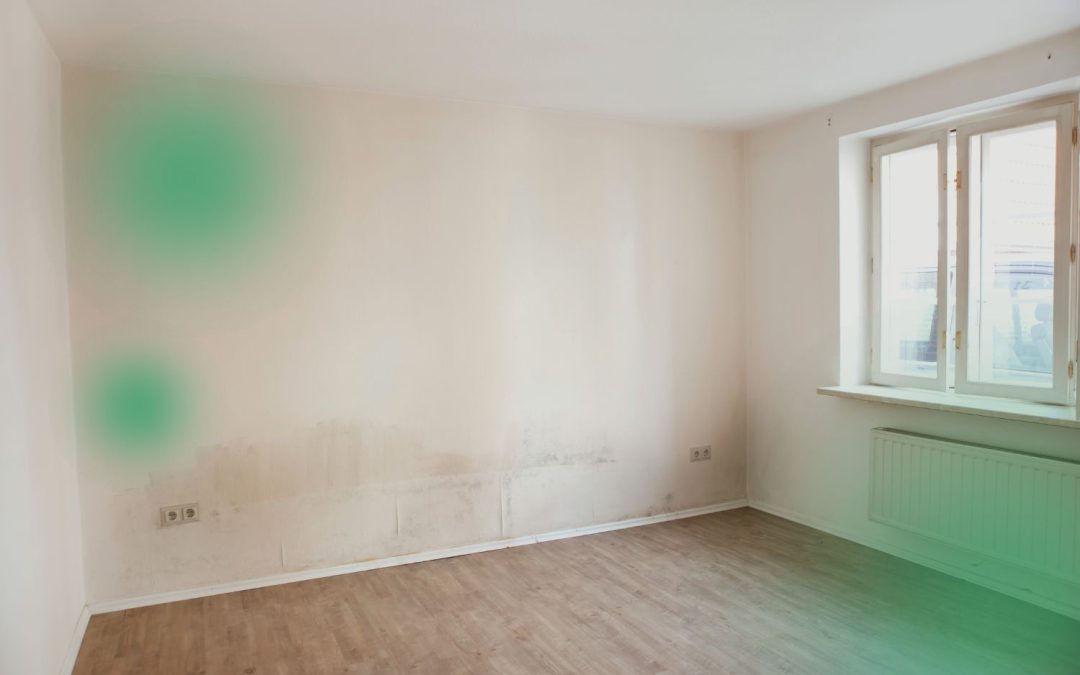
Florida’s high humidity and frequent tropical storms create the perfect conditions for indoor fungi to thrive. Whether you are a homeowner or managing a property, spotting a gray, powdery patch or a dark, fuzzy streak in your home can be alarming.
These growths are often simplified into a single category, but the physical characteristics and the risks they pose to your property’s health can vary significantly.
This guide clarifies the differences between surface-level fungi and more invasive species, helping you identify exactly what is growing in your home. By understanding the unique behaviors of these organisms, you can make informed decisions about moisture control, property maintenance, and when it is time to move from DIY cleaning to professional assessment.
What Is The Physical Difference Between Mold And Mildew?
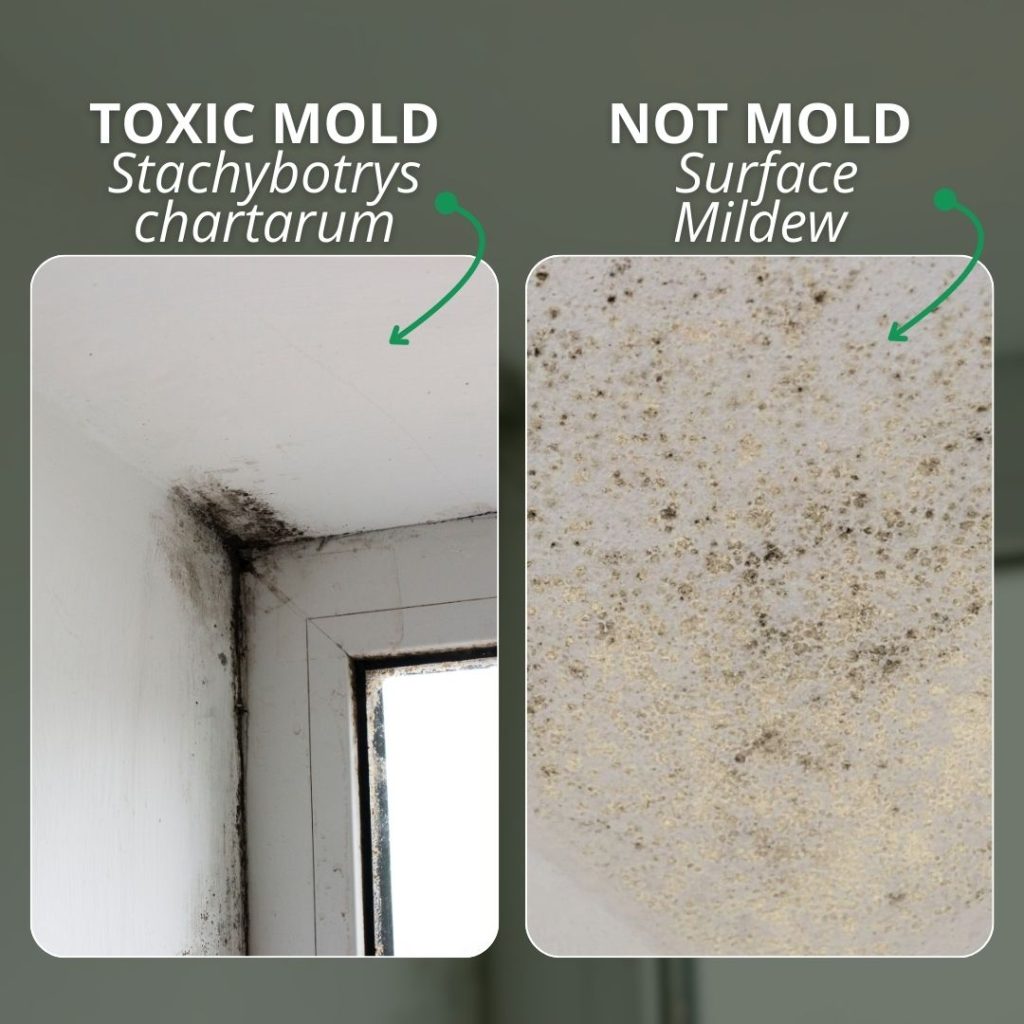
Mildew is a surface-level fungus that grows in a flat, powdery pattern, while other molds penetrate deep into porous materials with a fuzzy or slimy texture.
Because mildew typically stays on the surface of non-porous materials like tile, grout, or plastic, it is often easier to clean.
However, mold is much more invasive. It grows multicellular filaments called hyphae that “eat” into organic matter like drywall, wood framing, and carpet backing.
In the moist Florida environment, both can develop in areas with poor ventilation, but their growth patterns are distinct.
Mildew remains flat and spreadable, often looking like a dusting of gray or white powder. Mold, on the other hand, is a deeper-seated organism that can grow upward and through surfaces, often appearing in varied colors, including green, blue, or black.
Identification Comparison Table
| Feature | Mildew | Mold |
| Appearance | Flat, powdery, or “downy” | Fuzzy, slimy, velvety, or leathery |
| Common Colors | White, gray, or yellow | Black, green, brown, blue, or red |
| Growth Pattern | Patchy and stays on the surface | Deeply embedded and can expand irregularly |
| Scent | Mildly musty or no scent | Strong, pungent “earthy” or wet towel smell |
Where Does Mildew Typically Grow In Florida Homes?
Mildew thrives on surfaces with high humidity and minimal airflow, making it common on bathroom tiles, windowsills, and damp fabrics.
In Central Florida, it frequently appears in homes where the HVAC system has been off for a period or where condensation collects on cool surfaces. It is often a signal that local humidity levels are higher than they should be, even if a serious leak is not present.
Common surface areas for mildew:
- Shower Grout and Curtains: Areas where water lingers after daily use.
- Window Sills and Door Frames: Spots caused by condensation from indoor air.
- Stored Fabrics: Leather shoes, cotton clothing, or damp towels left in dark closets.
- Paper and Cardboard: Items stored in damp garages or unconditioned storage spaces.
Why Is Invasive Mold More Destructive Than Mildew?
While mildew can stain surfaces and cause minor respiratory irritation, deeper mold species can cause permanent structural rot and produce more severe health symptoms.
Because mold feeds on organic building materials, it can eventually weaken the framework of your property. Once mold enters your drywall or insulation, wiping the surface will not solve the problem because the “roots” remain active deep inside the material.
Risks To Your Property And Health
In Florida’s humid crawlspaces and attics, unaddressed mold can lead to:
- Structural Damage: Softened or crumbling wood framing and drywall.
- HVAC Contamination: Spores can enter your air handler and travel through ductwork to every room in the house.
- Serious Health Concerns: Mold exposure can trigger asthma attacks, chronic sinus issues, and in some cases, serious infections in sensitive individuals.
- Reduced Property Value: Undisclosed or unaddressed mold problems can derail real estate transactions and lower market value.
What Tools Are Used For Professional Mold Assessment?
Professional mold inspectors use specialized tools to detect moisture and spores that are completely invisible to the naked eye. These tools allow for a data-driven assessment rather than just a visual guess. In Florida’s climate, mold often grows behind walls or in insulation where it remains hidden until an inspection is performed.
Essential Inspection Technology
- Moisture Meters: Pin-type or pinless meters measure the moisture content in materials like drywall and wood to find active leaks.
- Infrared (Thermal) Cameras: These detect temperature variations that signal hidden moisture pockets or condensation behind walls.
- Air Sampling Pumps: These devices pull a specific volume of air through a cassette to capture airborne spores for laboratory analysis.
- Hygrometers: Tools that measure the relative humidity in a room to see if it is in the “danger zone” for mold growth (above 60%).
- Borescopes: Small cameras used to see inside wall cavities or HVAC ductwork without destroying building materials.
When To Call A Professional For a Mold Inspection
You should call a professional if you suspect mold is growing in hidden areas or if anyone in your home is experiencing unexplained respiratory issues.
While surface mildew can often be handled with basic cleaning, mold is frequently a symptom of a deeper moisture problem that requires expert investigation.
At Elite Mold Services, we prioritize an unbiased approach. We provide detailed inspections and testing without performing the remediation ourselves, ensuring our findings are purely for your property’s safety.
Signs that your home needs expert intervention:
- Persistent Musty Odors: You smell a “wet towel” scent but cannot find the source.
- Visible Growth Exceeding 10 Square Feet: Large contaminated areas often require professional protocols for safe removal.
- Recent Water Damage: You have experienced a roof leak, flood, or plumbing failure within the last 48 hours.
- Health Symptoms: Family members experience relief from sneezing, coughing, or itchy eyes only when they leave the home.
- Bubbling Paint or Stains: Discoloration on walls or ceilings often indicates mold is growing inside the wall cavity.
- Pre-Purchase or Pre-Sale: Verification of a home’s air quality before finalizing a real estate transaction.
Critical Factors In Florida Mold Prevention
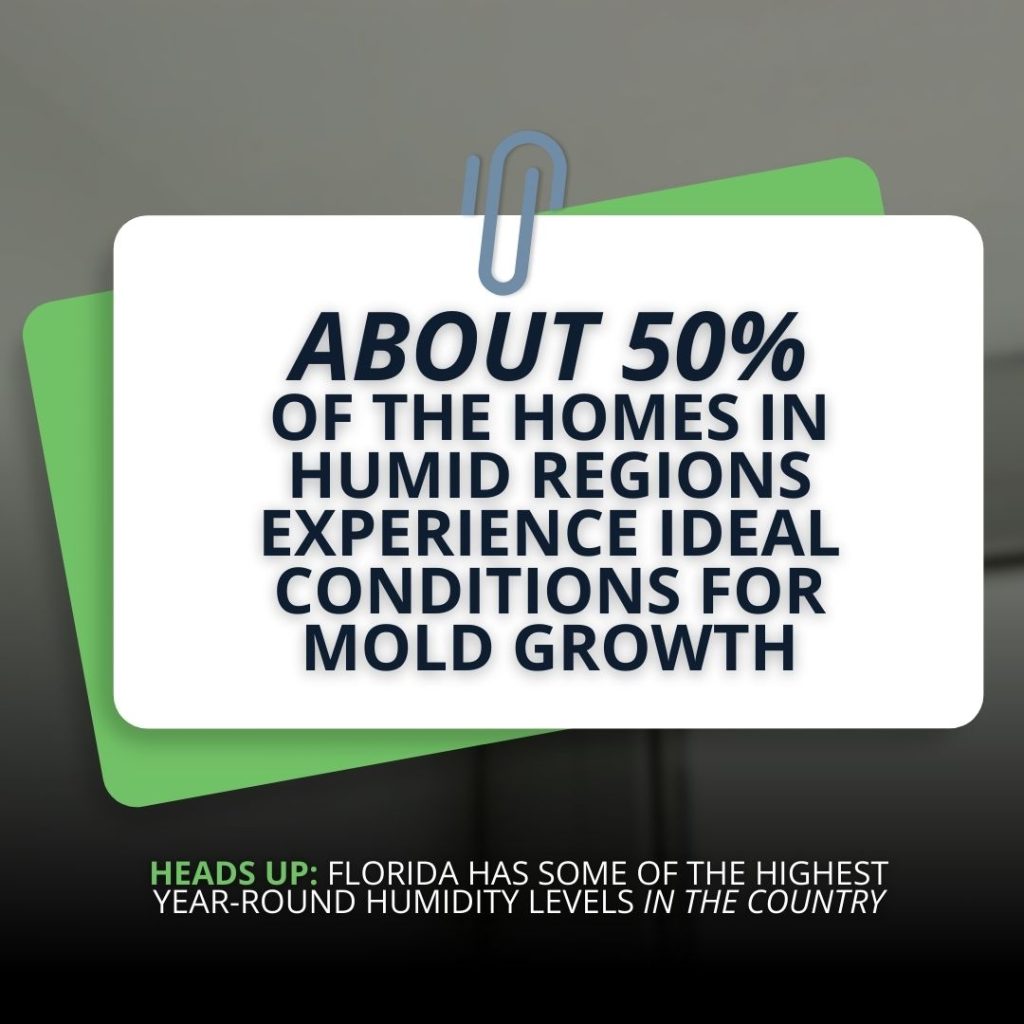
Florida homeowners must actively manage indoor environmental conditions to prevent both mildew and invasive mold from taking hold.
Because the outdoor climate provides constant heat and moisture, the indoor environment must act as a barrier. If your home’s systems are not properly maintained, the natural “Florida weather” will eventually move indoors, fueling fungal growth in less than 48 hours.
Humidity Control Strategies
The most effective way to prevent mold is to control moisture levels. High indoor humidity allows spores to germinate on organic materials like dust, paper, and wood.
- HVAC Maintenance: Ensure your air conditioning system is properly sized and serviced. An oversized unit may cool the air too quickly without removing enough moisture, leading to high humidity.
- Use Dehumidifiers: In areas like basements, crawlspaces, or laundry rooms, a dehumidifier can help maintain the ideal range of 30% to 50% humidity.
- Proper Ventilation: Always use exhaust fans in bathrooms and kitchens to vent moist air directly outside.
- Fix Leaks Immediately: Even a small drip under a sink can create enough localized moisture to start a mold colony.
Protecting Your Attic And Crawlspace
Attics and crawlspaces are the most vulnerable parts of a Florida home due to their proximity to the elements. In these areas, mold can spread through insulation and structural beams long before you notice an odor inside the living space.
- Inspect Attic Insulation: Check for signs of roof leaks or compressed, wet insulation.
- Vapor Barriers: In crawlspaces, a professional-grade vapor barrier can prevent ground moisture from rising into the subfloor.
- Soffit Vents: Ensure that your attic is properly vented to allow hot, moist air to escape.
Other Related Questions to Explore
What is the benefit of a mold inspection versus a mold test?
A mold inspection is a physical examination of the home to find moisture sources and visible growth, often using tools like thermal imaging.
A mold test specifically involves taking samples (air or surface) to identify the types and concentrations of spores present. Using both together provides the most complete picture of a home’s air quality.
How do you identify the source of moisture causing mold?
Finding the moisture source is critical because mold will return if the water issue isn’t fixed. Inspectors use moisture mapping, which involves testing materials around a suspected leak with moisture meters to see how far the water has traveled behind the surface. This might include checking the HVAC drain pans, roof flashing, or plumbing under sinks.
Why should a mold assessor be independent from a remediation company?
An independent, third-party mold assessor has no financial stake in the cost of repairs or removal. This eliminates a conflict of interest and ensures that the inspection results are unbiased. A reputable remediator should follow the “scope of work” or protocol developed by an independent assessor.
What is the benefit of an ERMI mold test for homeowners?
The Environmental Relative Moldiness Index (ERMI) is a DNA-based test that identifies specific mold species in your home’s dust. This is useful for individuals with severe sensitivities who need to know if highly toxic molds are present, even if they aren’t visible on walls.
Why is post-remediation verification testing necessary?
This “clearance testing” ensures that a mold removal project was successful and that spore counts have returned to normal ranges. It provides proof that the air is safe before you take down containment barriers or rebuild damaged walls.
Conclusion
Understanding that mildew is not the same as mold (specifically, it is a surface-level subclass of mold) is the first step in maintaining a healthy Florida home. While mildew is typically a minor issue caused by high humidity, deeper mold growth can compromise your property’s structure and your family’s air quality.
In the Orlando and Central Florida area, ignoring the “musty” signs of fungi can lead to complex and expensive repairs down the road.
At Elite Mold Services, we believe that every property owner deserves an honest, third-party look at their indoor environment. Get in touch and book your service today.